Quotessence
Home / Quotes / Quote by Maria Dahvana Headley

Quote by Maria Dahvana Headley

“I think of the note. I want to say me too. I want to say I know. I want to say I can read the gaps in your sentences. I can read the space between your letters. I know your language. It’s my language too. I want to say that.”

Quote by Maria Dahvana Headley

Book:Magonia

Work

Magonia

Magonia is a work of speculative fiction that delves into the concept of extraterrestrial life and the profound effects it would have on human society. The novel presents a scenario where humans have made contact with beings from another world, known as the Magonians, and follows the lives of individuals caught in the midst of this extraordinary event. more
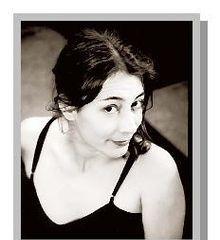
Author

Maria Dahvana Headley

Maria Dahvana Headley, born on June 21, 1977, is an accomplished American novelist known for her unique imagination, profound themes, and rich narrative techniques. Her works have gained popularity among readers. more

You May Also Like

“I have come to think of the UFO problem in terms of three distinct levels. The first level is physical. We now know that the UFO behaves like a region of space, of small dimensions (about ten meters), within which a very large amount of energy is stored. This energy is manifested by pulsed light phenomena of intense colors and by other forms of electromagnetic radiation. The second level is biological. Reports of UFOs show all kinds of psychophysiological effects on the witnesses. Exposure to the phenomenon causes visions, hallucinations, space and time disorientation, physiological reactions (including temporary blindness, paralysis, sleep cycle changes), and long-term personality changes. The third level is social. Belief in the reality of UFOs is spreading rapidly at all levels of society throughout the world. Books on the subject continue to accumulate. Documentaries and major films are being made by men and women who grew up with flying-saucer stories. Expectations about life in the universe have been revolutionized. Many modern themes in our culture can be traced back to the "messages from space" coming from UFO contactees of the forties and fifties. The experience of a close encounter with a UFO is a shattering physical and mental ordeal. The trauma has effects that go far beyond what the witnesses recall consciously. New types of behavior are conditioned, and new types of beliefs are promoted. Aside from any scientific consideration, the social, political, and religious consequences of the experience are enormous if they are considered over the timespan of a generation. Faced with the new wave of experiences of UFO contact that are described in books like Communion and Intruders and in movies like Close Encounters of the Third Kind, our religions seem obsolete. Our idea of the church as a social entity working within rational structures is obviously challenged by the claim of a direct communication in modern times with visible beings who seem endowed with supernatural powers. This idea can shake our society to the very roots of its culture. Witnesses are no longer afraid to come forward with personal stories of abductions, of spiritual exchanges with aliens, even of sexual interaction with them. Such reports are folklore in the making. I have discovered that they form a striking parallel to the tales of meetings with elves and jinn of medieval times, with the denizens of "Magonia," the land beyond the clouds of ancient chronicles. But they are something else, too: a portent of important things to come.”

“Am iesit odata afara, sa ma uit la cer - care acum e intunecat, cu o aschie subtire de luna - si nu e nimic cat de cat nerezonabil la el. Este doar el, cerul , si iata, Steaua Nordului. Imi place cerul . Este rational, asa cum viata mea nu e. Nu e naspa sa te uiti la el, cum ai putea sa crezi , [ ... ] . Nu ma gandesc la cer ca la o chestie care are legatura cu vreun rai. Ma gandesc la el ca la o gramada de gaze si ecouri indepartate ale unor chestii care au ars la un moment dat.”

“Do you think there is heaven or hell? he signed. ‘I don’t know. Not in the Christian way, if that’s what you mean. I think people have a right to believe in whatever they want. I just don’t.’… If someone came in here and gave you positive proof, would you do anything different? She shook her head. ‘I think it’s just as likely that someone could say that this place, right here, is heaven, hell and earth all at the same time. And we still wouldn’t know what to do differently. Everyone just muddles through, trying not to make too many mistakes.”