Quotessence
Home / Quotes / Quote by Thomas Paine

Quote by Thomas Paine

“The answer of Solon on the question, 'Which is the most perfect popular govemment,' has never been exceeded by any man since his time, as containing a maxim of political morality, 'That,' says he, 'where the least injury done to the meanest individual, is considered as an insult on the whole constitution.”

Quote by Thomas Paine

Work

The age of reason

Pensado by Thomas Paine, this seminal text delves into the author's beliefs regarding the role of reason in understanding the world and its implications for religion and governance. It is a critical examination of the supernatural and the divine, advocating for a rational approach to understanding the universe. more

Author

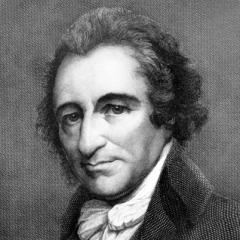
Thomas Paine
Thomas Paine

Thomas Paine, born on February 9, 1737, and died on June 8, 1809, was a prominent American writer, political figure, and philosopher during the American Revolutionary War. He is renowned for his radical democratic ideas and his contributions to the American independence movement. more

You May Also Like

“Like Solon, Plato intended to write a long fable about legendary Atlantis; like Solon, he never did write it. Yet there existed beyond the Atlantic an unvisited land, after all, and it is more strange than any of Plato's myths that Plato's apprehension of order and justice should be a living influence among the people of that land, twenty-four centuries after the mystical philosopher's soul departed from Athens.”

“A boy who is still a child grows baby teeth and loses them all in seven years. When God makes him fourteen, the signs of maturity begin to shine on his body. In the third seven, limbs growing, chin bearded, his skin acquires the color of manhood. In the fourth age a man is at a peak in strength—a sign in man of excellence. The time is ripe in the fifth for a young man to think of marriage and of offspring. In the sixth the mind of man is trained in all things; he doesn't try the impossible. In the seventh and eighth, that is, fourteen years, he speaks most eloquently in his life. He can still do much in the ninth but his speech and thought are discernibly less keen, and if he makes the full measure of ten sevens, when death comes, it will not come too soon.”