Quotessence
Home / Quotes / Quote by Suman Pokhrel

Quote by Suman Pokhrel

“Do not think; I've reached where I am now, by slipping like a landslide or evaporating like a cloud.”

Quote by Suman Pokhrel

Author
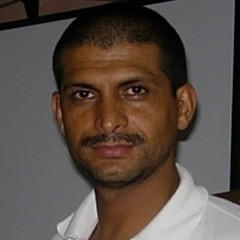
Suman Pokhrel
Suman Pokhrel

Suman Pokhrel, born on September 21, 1967, is a Nepalese poet whose works are known for their profound emotions and critical reflections on social realities. more

You May Also Like

“I started crying when the group [therapy] was over because the last thing we did upset me - we all held a piece of the same cloth, leaned back and supported each other's weight. I couldn't do it. I bent my legs and elbows and stood very firm, yet . . . I needed to feel supported, as i do in life, but i can't let myself be, and i pretend not to need that support.”

“L’homme cherche un principe au nom duquel il puisse mépriser l’homme ; il invente un autre monde pour pouvoir calomnier et salir ce monde-ci ; en fait, il ne saisit jamais que le néant et fait de ce néant un « Dieu », une « vérité » appelés à juger et à condamner cette existence-ci.”

“Dependence starts when we are born and lasts until we die. We accept our dependence as babies and ultimately, with varying degrees of resistance, we accept help when we get to the end of our lives. But in the middle of our lives, we mistakenly fall prey to the myth that successful people are those that help rather than need, and broken people need rather than help. Given enough resources, we can even pay for help and create the mirage that we are completely self-sufficient. But the truth is that no amount of money, influence, resources, or determination will change our physical, emotional, and spiritual dependence on others.”

“Naveen turned back to her, his penetrating eyes pleading with her to accept his help. "You don't have to do this all on your own. We're here for you. I'm here for you." Tiana hesitated as a blend of uncertainty and gratitude converged. This was her mess. She'd pulled them all into this; she shouldn't expect her friends to get her out of it. But Naveen was right: she didn't have to do this alone. She couldn't. "Okay," Tiana answered. The shame she thought she would feel didn't materialize. All she felt was overwhelming relief at knowing she didn't have to rely solely on herself.”

“We hear a great deal of talk about the midlife crisis of the executive. It is mostly boredom. At 45, most executives have reached the peak of their business careers, and they know it. After 20 years of doing very much the same kind of work, they are very good at their jobs. But they are not learning or contributing or deriving challenge and satisfaction from the job. And yet they are still likely to face another 20 if not 25 years of work. That is why managing oneself increasingly leads one to begin a second career. There are three ways to develop a second career. The first is actually to start one. [...] The second way to prepare for the second half of your life is to develop a parallel career. [...] Finally, there are the social entrepreneurs. [...] There is one prerequisite for managing the second half of your life: You must begin doing so long before you enter it.”