Quotessence
Home / Quotes / Quote by John Owen

Quote by John Owen

“Sin aims always at the utmost; every time it rises up to tempt or entice, might it have its own course, it would go out to the utmost sin in that kind. Every unclean thought or glance would be adultery if it could; every covetous desire would be oppression, every thought of unbelief would be atheism, might it grow to its head. Men may come to that, that sin may not be heard speaking a scandalous word in their hearts - that is, provoking to any great sin with scandal in its mouth; but yet every rise of lust, might it have its course, would come to the height of villainy: it is like the grave that is never satisfied.”

Quote by John Owen

Work

The Mortification of Sin

Browse quotes and source details for this work. more

Author
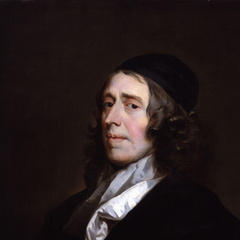
John Owen
John Owen

John Owen (1616-1683) was a prominent English theologian, writer, and pastor. His works have had a profound impact on Christian theology, particularly in the areas of predestination and moral theology. more

You May Also Like

“Shameful confession, one of my own Chelas (or so it is rather incredibly reported to me) said recently: "Self-discipline is a form of Restriction." (That, you remember, is "The word of Sin.") Of all the utter rubbish! (Anyhow, he was a "centre of pestilence" for discussing the Book at all.) About 90 percent of Thelema, at a guess, is nothing but self-discipline. One is only allowed to do anything and everything so as to have more scope for exercising that virtue. Concentrate on "Thou hast no right but to do thy will." The point is that any possible act is to be performed if it is a necessary factor in that Equation of your Will. Any act that is not such a factor, however harmless, noble, virtuous or what not, is at the best a waste of energy. But there are no artificial barriers on any type of act in general. The standard of conduct has one single touchstone. There may be—there will be—every kind of difficulty in determining whether, by this standard, any given act is 'right' or 'wrong'; but there should be no confusion. No act is righteous in itself, but only in reference to the True Will of the person who proposes to perform it. This is the Doctrine of Relativity applied to the moral sphere.”

“O my Mansoul, I have lived, I have died, I live, and I will die no more for thee. I live that thou mayest not die. Because I live thou shalt live also; I reconciled thee to my Father by the blood of My cross, and being reconciled thou shalt live through me. I will pray for thee, I will fight for thee, I will yet do thee good. Nothing can hurt thee but sin; nothing can grieve Me but sin; nothing can make thee base before thy foes but sin; take heed of sin, my Mansoul.”

“Not to be daily employing the Spirit and new nature for the mortifying of sin is to neglect that excellent succor which God has given us against our greatest enemy. If we neglect to make use of what we have received, God may justly hold his hand from giving us more. His graces, as well as his gifts, are bestowed on us to use, exercise, and trade with. Not to be daily mortifying sin is to sin against the goodness, kindness, wisdom, grace, and love of God, who has furnished us with a principle of doing it.”

“But that wasn't the chief thing that bothered me: I couldn't reconcile myself with that preoccupation with sin that, so far as I could tell, was never entirely absent from the monks' thoughts. I'd known a lot of fellows in the air corps. Of course they got drunk when they got a chance, and had a girl whenever they could and used foul language; we had one or two had hats: one fellow was arrested for passing rubber cheques and was sent to prison for six months; it wasn't altogether his fault; he'd never had any money before, and when he got more than he'd ever dreamt of having, it went to his head. I'd known had men in Paris and when I got back to Chicago I knew more, but for the most part their badness was due to heredity, which they couldn't help, or to their environment, which they didn't choose: I'm not sure that society wasn't more responsible for their crimes than they were. If I'd been God I couldn't have brought myself to condemn one of them, not even the worst, to eternal damnation. Father Esheim was broad-minded; he thought that hell was the deprivation of God's presence, but if that is such an intolerable punishment that it can justly be called hell, can one conceive that a good God can inflict it? After all, he created men, if he so created them that ti was possible for them to sin, it was because he willed it. If I trained a dog to fly at the throat of any stranger who came into by back yard, it wouldn't be fair to beat him when he did so. If an all-good and all-powerful God created the world, why did he create evil? The monks said, so that man by conquering the wickedness in him, by resisting temptation, by accepting pain and sorrow and misfortune as the trials sent by God to purify him, might at long last be made worthy to receive his grace. It seem to me like sending a fellow with a message to some place and just to make it harder for him you constructed a maze that he had to get through, then dug a moat that he had to swim and finally built a wall that he had to scale. I wasn't prepared to believe in an all-wise God who hadn't common sense. I didn't see why you shouldn't believe in a God who hadn't created the world, buyt had to make the best of the bad job he'd found, a being enormously better, wiser and greater than man, who strove with the evil he hadn't made and who might be hoped in the end to overcome it. But on the other hand I didn't see why you should.”