Quotessence
Home / Quotes / Quote by Joyce Carol Oates

Quote by Joyce Carol Oates

“She feel these hands tremble, and she could feel Mr. Kidder’s excitement. How eager she was to be gone from this room. Her heart was beating in mild revulsion from the man’s touch, but Katya forced herself to remain still, politely unresisting. In Mr. Kidder’s eyes, which brimmed with moisture, Katya saw such tenderness for her, such desire, or love, she felt that her throat might close, she might begin to cry. Gravely Mr. Kidder lowered his face to hers. Katya held her breath, but he just brushed his lips against her forehead and did not try to kiss her on the mouth.”

Quote by Joyce Carol Oates

Work

A Fair Maiden

Browse quotes and source details for this work. more

Author

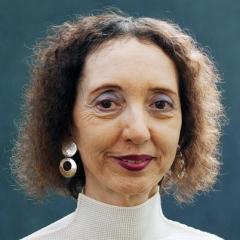
Joyce Carol Oates
Joyce Carol Oates

Joyce Carol Oates is a renowned American author born on June 16, 1938. Her works span various literary forms such as novels, poetry, and drama, known for her unique narrative techniques and profound thematic explorations. more

You May Also Like

“NO KISS FORGOTTEN; it resides in the memory as in the flesh, and so Katya many times felt the press of Marcus Kidder’s warm mouth on hers in the days and especially in the nights following. And her heartbeat quickened in protest: How could you! Kiss him! That old man! Kiss him! Let him put his arms around you ad kiss you and kiss him back! The old man’s mouth and Katya Spivak’s mouth! How could you.”

“She could feel these hands tremble, and she could feel Mr. Kidder’s excitement. How eager she was to be gone from this room. Her heart was beating in mild revulsion from the man’s touch, but Katya forced herself to remain still, politely unresisting. In Mr. Kidder’s eyes, which brimmed with moisture, Katya saw such tenderness for her, such desire, or love, she felt that her throat might close, she might begin to cry. Gravely Mr. Kidder lowered his face to hers. Katya held her breath, but he just brushed his lips against her forehead and did not try to kiss her on the mouth.”

“It was as if the city’s old, mossy walls, its ancient fountains covered in beautiful script, and its wooden homes, twisting and rotting to the point of leaning on one another for support, had all been burned down and wrecked into nothingness, and the new streets, concrete houses, neon-lit shops, and apartment blocks taking their place had been built to seem even older, more intimidating and incomprehensible, than any place before. The city was no longer an enormous, familiar home but a faithless space in which anyone who got the chance added more concrete, more streets, courtyards, walls, pavements, and shops.”

“Scotland's passage from a mainly pastoral and agrarian society to a commercial and industrial one was brutal, rapid and relentless. In that transition, an entire peasant class, the cottars - perhaps as much as half of the rural population - was lost forever. They and tens of thousands of even poorer people were forced off the land across the Lowlands, Highlands and islands. They ended up in towns, cities and planned villages, they worked in mills, mines, quarries and iron works, or they emigrated to other parts of the world, or became soldiers, sailors, engineers, administrators and merchants in the service of the British Empire or the companies that thrived under its bellicose protection. Many prospered, many did not.”