Quotessence
Home / Quotes / Quote by Cornelia Funke

Quote by Cornelia Funke

“Creo que ella se alimenta de letras. Toda su casa está abarrotada de libros. Ella los prefiere claramente a la compañía de las personas”

Quote by Cornelia Funke

Author
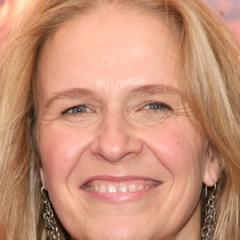
Cornelia Funke
Cornelia Funke

Cornelia Funke, born on December 10, 1958, is a renowned German children's literature author. Her works are highly praised for their rich imagination, unique narrative style, and profound humanistic concerns. Funke's writing covers a variety of themes including fantasy, adventure, and growth, and has won the hearts of readers worldwide. more

You May Also Like

“God did not created the world. He himself became the world. This is the core of vedantism. Every object, every being, each conscious as well as inconcient being is the divine manifestation on planet earth. Since, each one is the god itself, we have learnt to love, respect and worship everything around us. Therefore millions of beings, millions of gods.”

“God did not create the world. He himself became the world. This is the core of vedantism. Every object, every being, each conscious as well as inconcient being is the divine manifestation on planet earth. Since, each one is the god itself, we have learnt to love, respect and worship everything around us. Therefore millions of beings, millions of gods.”

“Savitri itself, one might say, is just such a ‘message from the unknown immortal Light’, revealed to humankind at the dawn of an age of global seeking and aspiration for change. To derive the utmost benefit from reading it, one must, to whatever degree, be able to open oneself to that Light. Much of Savitri describes things that take place in an inner consciousness or in subtle worlds beyond our normal awareness. The three books of Part One, forming the first half of the epic, are almost entirely of this character. After two opening cantos introducing the heroine’s crisis on the morning of the fateful day to which the narrative returns hundreds of pages later in ‘The Book of Death’, the rest of Part One is a flashback to the spiritual and occult experiences of Aswapati, the king and yogi who is Savitri’s father in the legend. These books culminate in a vision of the Divine Mother and her promise of an incarnation who is to bring a new factor into the play of forces upon earth.”

“The distinction between high and low culture depresses me, dividing all culture like Gaul into high, middle, and low. It’s a very comforting way to think about culture, so long as you think of yourself as highbrow. I think it speaks to, and speaks out of, anxiety about class, especially in the United States, as people from the lower classes begin to participate in the literary arts and intellectual life in an aggressive way. Then folks start claiming there is high, middle and low culture—so know your place, please, and stay there. I don’t think it would have made much sense to Whitman. Some of the distinctions between high and low culture wouldn’t make much sense to someone like John Brown of Harpers Ferry, for example, who thought that Milton and Jonathan Edwards were as available to him as penny broadsides.”