Quotessence
Home / Quotes / Quote by Sri Aurobindo

Quote by Sri Aurobindo

Work

Bhagavad Gita and Its Message

Browse quotes and source details for this work. more

Author
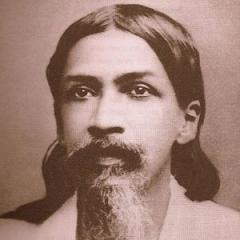
Sri Aurobindo
Sri Aurobindo

Sri Aurobindo, a philosopher, poet, and politician from India, was born on August 15, 1872, and passed away on December 5, 1950. He is renowned for his profound philosophical thoughts and his contributions to the spiritual revival of India. more

You May Also Like

“Savitri itself, one might say, is just such a ‘message from the unknown immortal Light’, revealed to humankind at the dawn of an age of global seeking and aspiration for change. To derive the utmost benefit from reading it, one must, to whatever degree, be able to open oneself to that Light. Much of Savitri describes things that take place in an inner consciousness or in subtle worlds beyond our normal awareness. The three books of Part One, forming the first half of the epic, are almost entirely of this character. After two opening cantos introducing the heroine’s crisis on the morning of the fateful day to which the narrative returns hundreds of pages later in ‘The Book of Death’, the rest of Part One is a flashback to the spiritual and occult experiences of Aswapati, the king and yogi who is Savitri’s father in the legend. These books culminate in a vision of the Divine Mother and her promise of an incarnation who is to bring a new factor into the play of forces upon earth.”

“The distinction between high and low culture depresses me, dividing all culture like Gaul into high, middle, and low. It’s a very comforting way to think about culture, so long as you think of yourself as highbrow. I think it speaks to, and speaks out of, anxiety about class, especially in the United States, as people from the lower classes begin to participate in the literary arts and intellectual life in an aggressive way. Then folks start claiming there is high, middle and low culture—so know your place, please, and stay there. I don’t think it would have made much sense to Whitman. Some of the distinctions between high and low culture wouldn’t make much sense to someone like John Brown of Harpers Ferry, for example, who thought that Milton and Jonathan Edwards were as available to him as penny broadsides.”

“Non-violent resistance supposes that the almighty enemy, at the very least, considers you to be a human being, capable of logically arguing why you disagree. It supposes that this enemy is ready to hear your demands and find common ground. Yes, Bamileke maquisards took up arms! But did they have a choice? Colonial masters feigned departure, but their cruel puppets continue to safeguard their interests through murder. We were cheated. Our struggle has been used to different ends. And, you will see, they will chop off any head that stands out, and then falsify our history. In fact, they won't; they will not even bother to record our history." "Who is "they?" I asked. "This 'they' is 'we’,” replied Louis. "We are the ones killing ourselves. Our killers are encouraged, trained, and funded by the former colonial power. But, and this is what makes it worse, we ourselves are the ones doing the dirty work with senseless enthusiasm," he added. That was how Cameroon—not just myself as an individual, or my village, Ombessa, or Bafia and Yaounde, the places where I had lived, but also this multi-layered, nuanced, bruised entity called my country—took shape in my mind.”

“You think there's something materialistic about collecting books, but really collectors are the last romantics. We're the only ones who still love books as objects." "That's the question," said Jess. "How do you love them if you're always selling them?" "I don't sell everything," he said. "You haven't seen my own collection." "What do you have?" "First editions. Yeats, Dickinson- all three volumes; Eliot, Pound, Millay..." He had noticed the books she read in the store. "Plath. I also have Elizabeth Bishop." "I wish I could see them," Jess said. "You would have come to my house." "Are you inviting me?" She must have known this was a loaded question, but she asked without flirtatiousness or self-consciousness, as if to say, I only want to know as a point of information. Yes, he thought, I'm inviting you, but he did not say yes. He was her employer. She could act with a certain plucky independence, but he would always be the big bad wolf.”