Quotessence
Home / Quotes / Quote by Ernest Hemingway

Quote by Ernest Hemingway

Work

The Old Man and the Sea

This renowned work delves into the life of an elderly fisherman who, despite his age and numerous setbacks, embarks on a perilous journey to catch a giant marlin. The narrative is a profound reflection on the human condition, the struggle against nature, and the enduring power of hope. more

Author
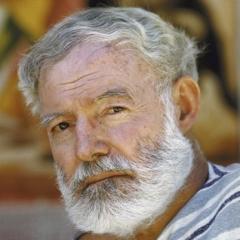
Ernest Hemingway
Ernest Hemingway

American author known for his concise and forceful writing style, as well as his profound insights into life. Hemingway's works cover a wide range of themes including war, adventure, and love, with notable titles such as 'The Old Man and the Sea' and 'A Farewell to Arms'. more

You May Also Like

“I have quite a few of ‘my own’ people now,” Stalin concluded, “but the very first day of the war revealed a lack of proper organization and coordination among them. Worse still, among these ‘my own’ there are plenty of fools — and traitors lying low. This filth must be eliminated as quickly as possible, because a new system of power can be built only if I do not fear for my rear.” He turned back to the sheet of paper and wrote decisively: “Immediately neutralize all spies and potential enemies.” The General Secretary of the Communist Party raised his eyes to the ceiling. Images of former comrades — now exposed as traitors — flashed before his mind’s eye. Blood rushed to his face; beneath his habitual vigilance, rage began to surface. Yes, I too had erred for too long, following the lead of Leninist–Trotskyist lackeys who believed the revolution could be exported by financing foreign anti-imperialist movements. Through these empty talkers, colossal resources had vanished abroad like water into sand — resources that should have gone into armaments. And time? Years lost. Years that were desperately needed now. These double-dealers should have been destroyed immediately after Trotsky’s defeat — a barren breed capable only of parroting outdated ideas of long-dead leaders. At least now they were no longer underfoot, no longer pulling in opposite directions and tearing the system apart. “Stop,” Stalin ordered himself. “I must not descend into emotion. That is unacceptable. What matters is drawing conclusions from my own miscalculations.” — Volodymyr Shablia, Stone. Book One Context note: An internal monologue of Joseph Stalin during the first days of the German–Soviet War, a later and decisive phase of World War II. The passage reveals the core logic of Stalinist power: paranoia, purges, and the conviction that absolute control — rather than human life — is the true foundation of victory. It exposes how fear, repression, and ideological obsession shaped decision-making at the highest levels of the Soviet state.”

“Why didn't the Democrats accomplish more right after the 2006 elections that gave them control of Congress? It wasn't just that they didn't have votes to override a presidential veto or block a filibuster. They didn't use their mandate to substantially change how the public--and the media-- thought about issues. They just tried to be rational, to devise programs to fit people's interests and the polls. Because there was little understanding of the brain, there was no campaign to change brains. Indeed, the very idea of "changing brains" sounds a little sinister to progressives-- a kind of Frankenstein image comes to mind. It sounds Machiavellian to liberals, like what the Republicans do. But "changing minds" in any deep way always requires changing brains. Once you understand a bit more about how brains work, you will understand that politics is very much about changing brains-- and that it can be highly moral and not the least bit sinister or underhanded.”

“It's fashionable among progressives to wonder why so many "red state" voters don't vote in their own economic interests. This is simply another symptom of 18th-century rationalism, which assumes that everyone is rational and rationality means seeking self-interest. [...] People are not 18th-century reason machines. Real reason works differently. Reason matters, and we have to understand how it really works.”

“The brain is not neutral; it is not a general-purpose device. It comes with a structure, and our understanding of the world is limited to what our brains can make sense of. Some of our thought is literal- framing our experience directly. But much of it is metaphoric and symbolic, structuring our experience indirectly but no less powerfully. Some of our mechanisms of understanding are the same around the world. But many are not, not even in our own country and culture.”

“The brain is not neutral; it is not a general-purpose device. It comes with a structure, and our understanding of the world is limited to what our brains can make sense of. Some of our thought is literal- framing our experience directly. But much of it is metaphoric and symbolic, structuring our experience indirectly but no less powerfully. Some of our mechanisms of understanding are the same around the world. But many are not, not even in our own country and culture. Our brains and minds work to impose a specific understanding on reality, and coming to grips with that can be scary, that not everyone understands reality in the same way. That fear has major political consequences. Since the brain mechanisms for understanding reality are mostly unconscious, and understanding of understanding itself becomes a political necessity.”