Quotessence
Home / Quotes / Quote by Eudora Welty

Quote by Eudora Welty

“What burdens we lay on the dying, Laurel thought, as she listened now to the accelerated rain on the roof: seeking to prove some little thing that we can keep to comfort us when they can no longer feel--something as incapable of being kept as of being proved: the lastingness of memory, vigilance against harm, self-reliance, good hope, trust in one another.”

Quote by Eudora Welty

Work

The Optimist's Daughter

Originally published in 1972, this work tells the story of Laurel Moore, who travels from Chicago to her hometown in Mississippi for her father's funeral. The narrative moves between past and present as she confronts memories of her family and her father's life. The novel is recognized for its literary merit and received the Pulitzer Prize for Fiction in 1973. more

Author
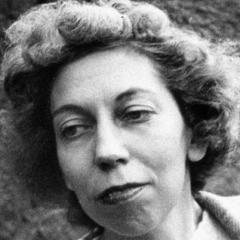
Eudora Welty
Eudora Welty

Eudora Welty was an American author renowned for her profound portrayal of life in the rural South. Her works often focus on the lives and characters of the Southern countryside, celebrated for their delicate emotions and unique narrative style. more

You May Also Like

“He felt that if they had both not kept up appearances, but had spoken, as it is called, from the heart—that is to say, had said only just what they were thinking and feeling—they would simply have looked into each other's faces, and Konstantin could only have said, "You're dying, you're dying!" and Nikolay could only have answered, "I know I'm dying, but I'm afraid, I'm afraid, I'm afraid!" And they could have said nothing more, if they had said only what was in their hearts. But life like that was impossible, and so Konstantin tried to do what he had been trying to do all his life, and never could learn to do, though, as far as he could observe, many people knew so well how to do it, and without it there was no living at all. He tried to say what he was not thinking, but he felt continually that it had a ring of falsehood, that his brother detected him in it, and was exasperated at it.”

“I googled 'suicide gene' but cancelled the search at the last second. I didn't want to know. Plus, I already knew. People ask: but how does this happen? To think that even with all the security measures we employ these days to keep things out - fences and motion detectors and cameras and sunscreen and vitamins and deadbolts and chains and bike helmets and spinning classes and guards and gates - we can have secret killers lurking inside us? That we can turn on our happy selves the way tumours invade healthy, wholesome organs, the way 'normal' moms suddenly throw their infants off the balcony is...who wants to think about that shit?”

“i am only beginning to realize how fragmented and uncoordinated I am. My left hand does not know what my right hand is doing. My heart tells me to go in one direction, and my mind another, and I do not know which to obey. I am furious with Mother for not being my mother, and I am filled with an aching tenderness I have never known before. There are rough waters below the surface of my consciousness, and strange, submarine winds. The submerged me is more aware of wild tides and undertows than the surface. One deep calls another, because of the noise of the water floods; all the waves and storms are gone over me. And above the surface the brazen sun shines, heat shimmers on the hills, and the long fronds of the golden willow Mother planted ten or more years ago droop in the stillness.”

“inevitably I think sometimes about my death, but those thoughts go away as quickly as they come. I tend not to dwell on them. Somebody asked me if I wanted to join a suicide society. It’s some organisation in Edinburgh that helps people to commit suicide and I believe that a lot of Parkinson’s sufferers choose that course of action. But I don’t want to. I’m too interested in what is going on around me. In any case, the fuckers didn’t even offer me a lifetime membership. I think life and death is a very simple question that is made far too complex by people who have an axe to grind. I think that when you die, you go to where you were before you were born: nowhere.”