Quotessence
Home / Quotes / Quote by Virginia Woolf

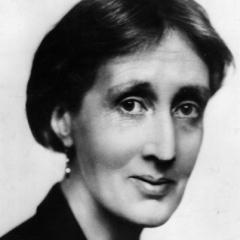
Quote by Virginia Woolf

“It partook ... of eternity ... there is a coherence in things, a stability; something, she meant, is immune from change, and shines out (she glanced at the window with its ripple of reflected lights) in the face of the flowing, the fleeting, the spectral, like a ruby; so that again tonight she had the feeling she had had once today, already, of peace, of rest. Of such moments, she thought, the thing is made that endures.”

Quote by Virginia Woolf

Work

To the Lighthouse

A classic work of modernist literature, the novel delves into the complexities of human relationships and the internal struggles of its characters through the lens of a family's summer vacation at a lighthouse. more

Author

Virginia Woolf
Virginia Woolf

British modernist writer, known for her unique narrative techniques and profound portrayal of female experience. Her works include 'To the Lighthouse' and 'Mrs. Dalloway'. more

You May Also Like

“Stone-cutters fighting time with marble, you fore defeated Challengers of oblivion Eat cynical earnings, knowing rock splits, records fall down, The square-limbed Roman letters Scale in the thaws, wear in the rain. The poet as well Builds his monument mockingly; For man will be blotted out, the blithe earth die, the brave sun Die blind and blacken to the heart: Yet stones have stood for a thousand years, and pained thoughts found The honey of peace in old poems.”

“We should not be surprised that more and more people feel comfortable about consuming animal products. After all, they are being assured by the “experts” that suffering is being decreased and they can buy “happy” meat, “free-range” eggs, etc.. These products even come with labels approved of by animal organizations. The animal welfare movement is actually encouraging the “compassionate” consumption of animal products. Animal welfare reforms do very little to increase the protection given to animal interests because of the economics involved: animals are property. They are things that have no intrinsic or moral value. This means that welfare standards, whether for animals used as foods, in experiments, or for any other purpose, will be low and linked to the level of welfare needed to exploit the animal in an economically efficient way for the particular purpose. Put simply, we generally protect animal interests only to the extent we get an economic benefit from doing so. The concept of “unnecessary” suffering is understood as that level of suffering that will frustrate the particular use. And that can be a great deal of suffering. Killing Animals and Making Animals Suffer | Animal Rights: The Abolitionist Approach”