Quotessence
Home / Quotes / Quote by Charles Dickens

Quote by Charles Dickens

“As she stooped over him, her tears fell upon his forehead. The boy stirred, and smiled in his sleep, as though these marks of pity and compassion had awakened some pleasant dream of a love and affection he had never known; as a strain of gentle music, or the rippling of water in a silent place, or the odour of a flower, or even the mention of a familiar word, will sometimes call up sudden dim remembrances of scenes that never were, in this life; which vanish like a breath; and which some brief memory of a happier existence, long gone by, would seem to have awakened, for no voluntary exertion of the mind can ever recall them.”

Quote by Charles Dickens

Work

Oliver Twist

Oliver Twist is a classic novel that follows the life of an orphan boy born in a workhouse. After daring to ask for more food, Oliver is punished and eventually runs away to London. There, he is taken in by a group of young pickpockets led by the cunning Fagin. The story explores themes of poverty, social injustice, and the struggle between good and evil as Oliver encounters both cruel and compassionate characters, ultimately seeking a place where he belongs. more

Author

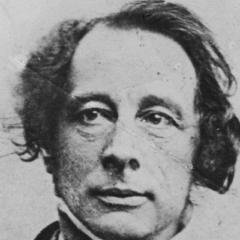
Charles Dickens
Charles Dickens

Charles Dickens, a British writer born on February 7, 1812, and died on June 9, 1870, is one of the greatest novelists of the 19th century. Known for his profound social criticism and vivid narrative style, Dickens' works extensively cover social reality, revealing various issues in the British society of the time. more

You May Also Like

“Though beauty is autonomous, there seem to be occasions when human presence can become congruent with her will. In creative work no amount of force or mechanical management can guarantee beauty. Suddenly, without expecting it, beauty is there. Yet ultimately beauty is a profound illumination of presence, a stirring of the invisible in visible form and in order to receive this we need to cultivate a new style of approaching the world.”

“In our day, there are stresses and fractures of the human-animal bond, and some forces at work would sever it once and for all. They pull us in the wrong direction and away from the decent and honorable code that makes us care for creatures who are entirely at our mercy. Especially within the last two hundred years, we've come to apply an industrial mind-set to the use of animals, too often viewing them as if they were nothing but articles of commerce and the raw material of science, agriculture, and wildlife management. Here, as in other pursuits, human ingenuity has a way of outrunning human conscience, and some things we do only because we can--forgetting to ask whether we should.”