Quotessence
Home / Quotes / Quote by Sidney Poitier

Quote by Sidney Poitier

Work

Life Beyond Measure: Letters to My Great-Granddaughter

Browse quotes and source details for this work. more

Author
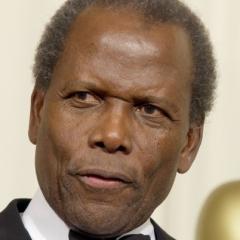
Sidney Poitier
Sidney Poitier

Sidney Poitier (February 20, 1927 – January 6, 2022) was a Bahamian-American actor, film director, and diplomat. He was the first Black actor to win the Academy Award for Best Actor, for his role in Lilies of the Field (1963). Poitier broke racial barriers in Hollywood during the 1950s and 1960s, starring in groundbreaking films such as In the Heat of the Night and Guess Who's Coming to Dinner. Known for his dignity and grace, he became a symbol of the civil rights movement. He also served as Bahamas' ambassador to Japan and UNESCO. In 2009, he received the Presidential Medal of Freedom. more

You May Also Like

“But the attitude that Viking society held up as the ideal one was a heroic stoicism. In the words of archaeologist Neil Price, "The outcome of our actions, our fate, is already decided and therefore does not matter. What is important is the manner of our conduct as we go to meet it." You couldn't change what was going to happen to you, but you could at least face it with honor and dignity. The best death was to go down fighting, preferably with a smile on your lips. Life is precarious by nature, but this was especially true in the Viking Age, which made this fatalism, and stoicism in the face of it, especially poignant. The model of this ideal was Odin's amassing an army in Valhalla in preparation for Ragnarok. He knew that Fenrir, "the wolf", was going to murder him one way or another. Perhaps on some level he hoped that by gathering all of the best warriors to fight alongside him, he could prevent the inevitable. But deep down he knew that his struggle was hopeless - yet he determined to struggle just the same, and to die in the most radiant blaze of glory he could muster.”

“She turned to look at Althea with eyes the color if brandy in firelight. "Can't you feel it?" she asked her in a whisper. "Look around you. We are on the cusp. We are a coin spinning in the toss, a card fluttering in the flip, a rune chip floating in stirred water. Possibilities swarm like bees. In this day, in a moment, in a breath, the future of the world will shift course by a notch, One way or another, the coin will land ringing, the card will settle to the table, the chip will bob to the surface, The face that shows uppermost will set our days, and children to come will say, "That is just the way it has always been.”

“Euripides, however, has drawn Fate down from the region of the infinite; and with him inevitable necessity not unfrequently degenerates into the caprice of chance. Accordingly, he can no longer apply it to its proper purpose, namely, by contrast with it, to heighten the moral liberty of man. How few of his pieces turn upon a steadfast resistance to the decrees of fate, or an equally heroic submission to them! His characters generally suffer because they must, and not because they will.”