Quotessence
Home / Quotes / Quote by Susan Howatch

Quote by Susan Howatch

“One wonders what would happen in a society where there were no rules to break. Doubtlessly everyone would quickly die of boredom.”

Quote by Susan Howatch

Author
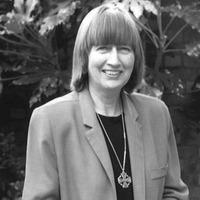
Susan Howatch
Susan Howatch

Susan Howatch (born July 14, 1940) is a British author known for her family sagas and religious-themed novels. Her works often explore complex relationships, historical settings, and moral dilemmas. She gained international fame in the 1970s with bestsellers like 'The Dark of the Sun' and 'The Cashelmara', which are multi-generational family epics. Later, she shifted to religious fiction, creating the 'St. Benet's' series that delves into faith, power, and redemption. Howatch's writing is praised for its psychological depth and narrative drive, making her a unique voice in contemporary literature. more

You May Also Like

“Emma: You can demand that Pettibone retain my services, but you cannot make similar demands of the parents of the students. They will not entrust the education of their daughters to a woman who has removed her clothing for an artist, no matter how exalted that artist may be. Pettibone would become a school without students. No that avenue is closed to me now. Nicholas: Women disrobe for men other than their husbands every day. Emma: But they are not on exhibition in the Royal Academy. Nicholas: what of extenuating circumstances? Emma: You make no sense”

“[Medieval] Art was not just a static element in society, or even one which interacted with the various social groups. It was not simply something which was made to decorate or to instruct — or even to overawe and dominate. Rather, it was that and more. It was potentially controversial in ways both similar and dissimilar to its couterpart today. It was something which could by its force of attraction not only form the basis for the economy of a particular way of life, it could also come to change that way of life in ways counter to the original intent. Along with this and because of this, art carried a host of implications, both social and moral, which had to be justified. Indeed, it is from the two related and basic elements of justification and function — claim and reality — that Bernard approaches the question of art in the Apologia.”

“They said she killed herself.Everyone was saying It. What started out as a rumor, quietly whispered among small gatherings of polite people, quickly grew into something that was openly discussed in a large gatherings of impolite people. I was so sick of hearing them talk about It. They questioned me. Over and over again, trying to find out If i knew what happened. But my answers didn't change. Yet It never failed-someone else would ask, as if one day my reply would suddenly be different. I didn't know, but i should have...and I've been haunted ever since.”