“After two or three stanzas and several images by which he was himself astonished, his work took possession of him and he experienced the approach of what is called inspiration. At such moments the correlation of the forces controlling the artist is, as it were, stood on its head. The ascendancy is no longer with the artist or the state of mind which he is trying to express, but with language, his instrument of expression. Language, the home and dwelling of beauty and meaning, itself begins to think and speak for man and turns wholly into music, not in the sense of outward, audible sounds but by virtue of the power and momentum of its inward flow. Then, like the current of a mighty river polishing stones and turning wheels by its very movement, the flow of speech creates in passing, by the force of its own laws, rhyme and rhythm and countless other forms and formations, still more important and until now undiscovered, unconsidered and unnamed. At such moments Yury felt that the main part of his work was not being done by him but by something which was above him and controlling him: the thought and poetry of the world as it was at that moment and as it would be in the future. He was controlled by the next step it was to take in the order of its historical development; and he felt himself to be only the pretext and the pivot setting it in motion. ... In deciphering these scribbles he went through the usual disappointments. Last night these rough passages had astonished him and moved him to tears by certain unexpectedly successful lines. Now, on re-reading these very lines, he was saddened to find that they were strained and glaringly far-fetched.”
Quote by Boris Pasternak
Book:Doctor Zhivago
Work
Doctor Zhivago
Browse quotes and source details for this work. more
Author
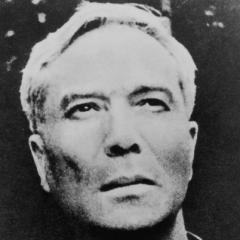
Boris Pasternak
Russian poet, writer, and translator. Boris Pasternak is renowned for his profound psychological insight and beautiful poetic language. His works widely cover themes such as love, humanity, morality, and philosophy, and have had a profound impact on 20th-century literature. more
You May Also Like
Source: Skinny Legs and All
“The Baron told her that only art meant anything.”
Source: The Gilded Bat
Source: The Dream of Scipio
Source: Mona Lisa does not smile anymore
“Erik Satie died on July 1, 1925; his last words were 'Ah, the cows...”
Source: A Life of Picasso: The Triumphant Years: 1917-1932
“Any clod can have the facts, but having opinions is an art.”
Source: The Amazing Adventures of Kavalier & Clay