Quotessence
Home / Quotes / Quote by Ernest Hemingway

Quote by Ernest Hemingway

Work

On Writing

This book delves into the intricacies of writing, providing a mix of personal anecdotes and professional guidance. It covers various aspects of the writing process, from crafting compelling characters and structuring narratives to the importance of editing and revising. The author shares their own journey as a writer, offering readers a unique perspective on the challenges and rewards of the craft. more
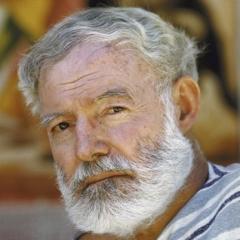
Author

Ernest Hemingway
Ernest Hemingway

American author known for his concise and forceful writing style, as well as his profound insights into life. Hemingway's works cover a wide range of themes including war, adventure, and love, with notable titles such as 'The Old Man and the Sea' and 'A Farewell to Arms'. more

You May Also Like

“I had once tried to write, had once reveled in feeling, had let m crude imagination roam, but the impulse to dream had been slowly beaten out of me by experience. Now it surged up again and i hungered for books, new ways of looking and seeing. It was not a matter of believing or disbelieving what I read, but of feeling something new, of being affected by something that made the look of the world different.”

“Broadening personal knowledge of the world is a worthwhile adventure. Education flows from insightful firsthand experience and from listening carefully to the astute observations of other people. It is essential to pay heed to valuable information passed down by writers and by the viva voce of respected contemporaries. I must take what is portable from the dearth of personal encounters and make out what I can from the richness of studious words shared by kindhearted souls whom I have met and what few author’s lustrous works that I was privileged to read.”

“Taking advantage of the privilege of reading is an apt starting point in the developmental process of declaring a living philosophy. A perceptive reader takes into account what the author says, rolls that material around in their brain, contrast what the author said in comparison to what other knowledgeable people wrote, and examines each writer’s variegated utterances based upon the reader’s own accumulation of real life experiences. In order to appreciate great literature, a person must endure an active personal engagement in the real world. We must acquire a clutch of hands-on experiences and reflect upon this well of vetted information in order to gain a modicum of intelligent discernment.”

“Nonreaders rely almost exclusively upon their senses and tactile interactions to interpret their external environment whereas people who read are apt to rely upon their internal interpretation of other people’s written thoughts. Nonreaders tend to catalogue their life experiences and derive their values exclusively through their interaction with external stimuli.”

“In the same way, the reader of a book who happens to be out of tune with the author's prevailing mood will be bored to death by the things that were written with the greatest enthusiasm. Or else, like the far-away correspondent, he may seize on something which for you was not essential, to make it of the core and kernel of the book.”