Quotessence
Home / Quotes / Quote by Patricia Hill Collins

Quote by Patricia Hill Collins

“Racial segregation remains a fundamental feature of the U.S. social landscape, leaving many African-Americans with the belief that "the more things change, the more they stay the same." Overlaying these persisting inequalities is a rhetoric of color blindness designed to render these social inequalities invisible. In a context where many believe that to talk of race fosters racism, equality allegedly lies in treating everyone the same. Yet as Kimberle Crenshaw (1997) points out, "it is fairly obvious that treating different things the same can generate as much inequality as treating the same things differently.”

Quote by Patricia Hill Collins

Work

Black Feminist Thought: Knowledge, Consciousness, and the Politics of Empowerment

This book delves into the intellectual and political landscape of black feminism, examining its concepts of knowledge and consciousness as they relate to the empowerment of black women. more

Author
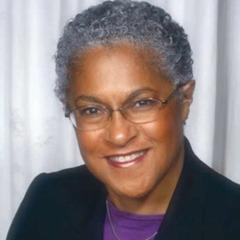
Patricia Hill Collins

Patricia Hill Collins is an esteemed American sociologist known for her contributions to the theory of intersectionality, focusing on how race, class, and gender intersect to shape social structures and individual experiences. more

You May Also Like

“One of my greatest pleasures there was enjoying the smell of bacon frying and coffee brewing and knowing that white folks were doing the preparing instead of me. There was swimming in the man-made lake, volleyball, square dancing. It was quite enjoyable to be with at Highlander. We forgot what color anybody was. I was forty-two years old, and it was one of the few times in my life up to that point when I did not feel any hostility from white people.”

“Well, our economic system "works," it just works in the interests of the masters, and I'd like to see one that works in the interests of the general population. And that will only happen when they are the "principal architects" of policy, to borrow Adam Smith's phrase. I mean, as long as power is narrowly concentrated, whether in the economic or the political system, you know who's going to benefit from the policies―you don't have to be a genius to figure that out. That's why democracy would be a good thing for the general public. But of course, achieving real democracy will require that the whole system of corporate capitalism be completely dismantled―because it's radically anti-democratic. And that can't be done by a stroke of the pen, you know: you have to build up alternative popular institutions, which could allow control over society's investment decisions to be moved into the hands of working people and communities. That's a long job, it requires building up an entire cultural and institutional basis for the changes, it's not something that's just going to happen on its own. There are people who have written about what such a system might look like―kind of a "participatory economy," it's sometimes called. But sure, that's the way to go, I think.”

“Når du allerede fra fødslen stemples, fordi du kun er en pige; når du fødes med mærkaterne skyld og skam præget ind i huden, fordi du kun er en pige; når dit vilkår som menneske er, at du aldrig vil være god nok, fordi du ikke er født som dreng – så har du kun tre veje, du kan vælge gennem livet: Du kan forsøge at holde ud, dræbe din stemme og gennemleve volden og undertrykkelsen som en tavs eksistens bag dit slør. Du kan dø for din egen hånd eller en mands. Eller du kan forsøge at bryde fri, selvom det koster dig alt. Måske endda livet.”

“In some countries, the strictly Progressive man reveals himself to be just as much as if not more prejudiced than the typical Reactionary. There is at times a sort of arrogant condescension in one's gushing, bleeding-heartedness, in that, behind the mask of social activism, one is acting on behalf of one's perceived 'inferiors'. He may promote himself as the savior of the world; he may pat on the head all those he insidiously assumes to be the lesser, whether in status or class or ability, and treat them as helpless children: but the biggest danger of all is that by his own conscience he may feel for them, think for them, and thus, decide for them. It is with such, this artificial brand of empathy, and self-righteousness and narcissism, that we always naively yet so ignorantly pity 'the others', and ultimately, in our schemes to secure them, we merely hold them down.”

“The rich and powerful are going to survive longer, but the effects are very real―and they're getting worse very quickly as more and more people get marginalized because they play no role in profit-making, which is considered the only human value. Well, the environmental problems are simply much more significant in scale than anything else in the past. And there's a fair possibility―certainly a possibility high enough so that no rational person would exclude it―that within a couple hundred years the world's water-level will have risen to the point that most of human life will have been destroyed.”