Quotessence
Home / Quotes / Quote by Jacqueline Woodson

Quote by Jacqueline Woodson

“Maybe all over the world there were daughters who knew their mothers as young girls and old women, inside and out, deep. I wasn't one of them. Even when I was a baby, my memory of her is being only halfway here.”

Quote by Jacqueline Woodson

Work

Red at the Bone

Browse quotes and source details for this work. more
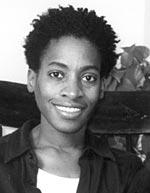
Author

Jacqueline Woodson
Jacqueline Woodson

Jacqueline Woodson is an American writer known for her concise and poetic style. Her works cover a variety of themes, including race, identity, family, and growth. Born on February 12, 1963, Woodson's writing career began in children's literature and later expanded to adult literature. more

You May Also Like

“J.R.R. Tolkien was also opposed to the Novus Ordo Mass. Simon Tolkien recalls his grandfather’s protest to the Novus Ordo: "I vividly remember going to church with him in Bour-nemouth. He was a devout Roman Catholic and it was soon after the Church had changed the liturgy from Latin to English. My grandfather obviously didn’t agree with this and made all the responses very loudly in Latin while the rest of the congregation answered in English. I found the whole experience quite excruciating, but my grandfather was oblivious. He simply had to do what he believed to be right.”

“Was Archbishop Lefebvre justified in contemplating illicit consecrations? ... At the time I believed he was wrong. Twenty years after his death, I believe he was right. Without his action, the traditionalists would now be an ineffective handful of priests at the mercy of the Modernist Church.”

“[Archbishop Lefebvre's excommunication] may be compared with the excommunications that popes in former times pronounced on their political enemies, sentences which were formally valid but which nobody today would regard as having moral force. In fact its weight is less, for the excommunication came not from a merely secular policy but from one aimed at excluding tradition from the Church or obliging it to compromise with false principles.”

“These, then, are the reasons why we cannot accept compromises concerning Econe. Whatever may be said to us, we shall not agree to abandon the Tradition of the Church. We shall not agree to separate ourselves from all the Popes who have spoken since the Council of Trent or from the Council of Trent. We prefer to be with the Popes of four centuries than be with the present Roman Curia, which wants and institutes all kinds of novelties and thus tends to make us Protestants and Modernists. We do not want that and we are persuaded that, in so acting with the Pope. For the Pope cannot be against Tradition. It is impossible. (lecture given September 9, 1975 in Vienna, Austria)”

“In his remarks about Father Gruner at the end of the June 26 press conference, Cardinal Ratzinger had also noted that Father Gruner was no doubt suffering from angoscia - the Italian word for extreme mental anguish. Cardinal Ratzinger obviously knew of the threat of excommunication, which would indeed cause angoscia in any faithful priest who loves the Church. But Father Gruner's plight is only emblematic of the plight of the Church as a whole in the post-conciliar epoch: a priest who has committed no offense against faith and morals is personally threatened with excommunication by the very head of the Congregation for the Clergy, while throughout the Church predators in Roman collars molest alter boys or spread heresy as their bishops move them from place to place or conceal their activities and protect them from punishment; and the Congregation for the Clergy does nothing. What is to explain this outrageous disparity of justice? There seems to us only one sensible explanation, based on what we have shown thus far: In the Catholic Church of the post-conciliar Adaption, the one unforgiveable offense, just as in Stalinist Russia, is to buck the Party Line. And Father Gruner had bucked the Party Line on Fatima.”