Quotessence
Home / Quotes / Quote by Stendhal

Quote by Stendhal

“[...] "Non si può amare senza uguaglianza...". E tutto il suo spirito si smarrì nei luoghi comuni sull'uguaglianza. Ripeteva tra sé con rabbia il verso di Corneille, che la signora Derville gli aveva insegnato alcuni giorni prima: ...L'amore crea le uguaglianza senza cercarle.”

Quote by Stendhal

Work

The Red and the Black

In this classic French novel, the protagonist, a young man named Jean Valjean, navigates the complex social and political landscape of post-Napoleonic France. The story delves into the intricacies of human ambition, the pursuit of social status, and the moral dilemmas faced by individuals in a rapidly changing society. The novel is renowned for its vivid portrayal of the era and its exploration of the human condition. more

Author
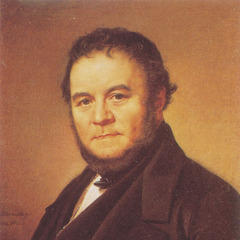
Stendhal
Stendhal

Stendhal, born Marie-Henri Beyle, was a prominent 19th-century French novelist and literary critic. Known for his profound psychological portrayals and unique narrative style, his works include masterpieces such as 'The Red and the Black' and 'The Charterhouse of Parma'. Stendhal was born on January 23, 1783, and died on March 23, 1842. more

You May Also Like

“We should be cautiously open to the spiritual and non-rational, and skeptical of the more invisible magical thinking—what we might call “magical reason”—pervading secular thought and experience in modern society. Science and technology are for most people a new religion, and their orthodoxies are believed with the same fervor.”

“I went into the dining-room, where four covered pots of soup stood on the table, and moved over to the bookshelves to the left of the fireplace. Here I kept two or three dozen works on architecture and sculpture, and a hundred or so plain texts of the standard English and French poets, stopping chronologically well short of our own day: Mallarmé and Lord de Tabley are my most modern versifiers. I have no novelists, finding theirs a puny and piffling art, one that, even at its best, can render truthfully no more than a few minor parts of the total world it pretends to take as its field of reference. A man has only to feel some emotion, any emotion, anything differentiated at all, and spend a minute speculating how this would be rendered in a novel—not just the average novel, but the work of a Stendhal or a Proust—to grasp the pitiful inadequacy of all prose fiction to the task it sets itself. By comparison, the humblest productions of the visual arts are triumphs of portrayal, both of the matter and of the spirit, while verse—lyric verse, at least—is equidistant from fiction and life, and is autonomous.”

“There is a distinct difference between "suspense" and "surprise," and yet many pictures continually confuse the two. I'll explain what I mean. We are now having a very innocent little chat. Let's suppose that there is a bomb underneath this table between us. Nothing happens, and then all of a sudden, "Boom!" There is an explosion. The public is surprised, but prior to this surprise, it has seen an absolutely ordinary scene, of no special consequence. Now, let us take a suspense situation. The bomb is underneath the table and the public knows it, probably because they have seen the anarchist place it there. The public is aware the bomb is going to explode at one o'clock and there is a clock in the decor. The public can see that it is a quarter to one. In these conditions, the same innocuous conversation becomes fascinating because the public is participating in the scene. The audience is longing to warn the characters on the screen: "You shouldn't be talking about such trivial matters. There is a bomb beneath you and it is about to explode!" In the first case we have given the public fifteen seconds of surprise at the moment of the explosion. In the second we have provided them with fifteen minutes of suspense. The conclusion is that whenever possible the public must be informed. Except when the surprise is a twist, that is, when the unexpected ending is, in itself, the highlight of the story.”

“I put it to the great man [Hitchcock], the key to fictitious terror is partition or containment: so long as the Bates Motel is sealed off from our world, we want to peer in, like at a scorpion enclosure. But a film that shows the world is a Bates Motel, well, that's... the stuff of Buchloe, dystopia, depression. We'll dip our toes in a predatory, amoral, godless unive3rse, but only our toes.”