Quotessence
Home / Quotes / Quote by Patricia Highsmith

Quote by Patricia Highsmith

“It was important that the objects of love be nothing but recipients, he thought again. Love was an outgoing thing, a gift that one should not expect to be returned. Stendhall must have said that, Proust certainly, using other words: a piece of wisdom his eyes had passed over reading.”

Quote by Patricia Highsmith

Work

Those Who Walk Away

Browse quotes and source details for this work. more

Author

Patricia Highsmith
Patricia Highsmith

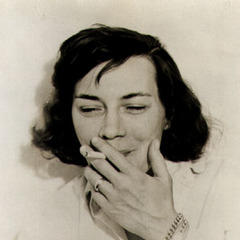
Patricia Highsmith was an American novelist renowned for her psychological thrillers. Her works often delve into the darker aspects of human nature, particularly themes of loneliness and fear. Her most famous works include 'The Price of Salt' and 'The Glass House'. more

You May Also Like

“We should be cautiously open to the spiritual and non-rational, and skeptical of the more invisible magical thinking—what we might call “magical reason”—pervading secular thought and experience in modern society. Science and technology are for most people a new religion, and their orthodoxies are believed with the same fervor.”

“I went into the dining-room, where four covered pots of soup stood on the table, and moved over to the bookshelves to the left of the fireplace. Here I kept two or three dozen works on architecture and sculpture, and a hundred or so plain texts of the standard English and French poets, stopping chronologically well short of our own day: Mallarmé and Lord de Tabley are my most modern versifiers. I have no novelists, finding theirs a puny and piffling art, one that, even at its best, can render truthfully no more than a few minor parts of the total world it pretends to take as its field of reference. A man has only to feel some emotion, any emotion, anything differentiated at all, and spend a minute speculating how this would be rendered in a novel—not just the average novel, but the work of a Stendhal or a Proust—to grasp the pitiful inadequacy of all prose fiction to the task it sets itself. By comparison, the humblest productions of the visual arts are triumphs of portrayal, both of the matter and of the spirit, while verse—lyric verse, at least—is equidistant from fiction and life, and is autonomous.”

“There is a distinct difference between "suspense" and "surprise," and yet many pictures continually confuse the two. I'll explain what I mean. We are now having a very innocent little chat. Let's suppose that there is a bomb underneath this table between us. Nothing happens, and then all of a sudden, "Boom!" There is an explosion. The public is surprised, but prior to this surprise, it has seen an absolutely ordinary scene, of no special consequence. Now, let us take a suspense situation. The bomb is underneath the table and the public knows it, probably because they have seen the anarchist place it there. The public is aware the bomb is going to explode at one o'clock and there is a clock in the decor. The public can see that it is a quarter to one. In these conditions, the same innocuous conversation becomes fascinating because the public is participating in the scene. The audience is longing to warn the characters on the screen: "You shouldn't be talking about such trivial matters. There is a bomb beneath you and it is about to explode!" In the first case we have given the public fifteen seconds of surprise at the moment of the explosion. In the second we have provided them with fifteen minutes of suspense. The conclusion is that whenever possible the public must be informed. Except when the surprise is a twist, that is, when the unexpected ending is, in itself, the highlight of the story.”

“I put it to the great man [Hitchcock], the key to fictitious terror is partition or containment: so long as the Bates Motel is sealed off from our world, we want to peer in, like at a scorpion enclosure. But a film that shows the world is a Bates Motel, well, that's... the stuff of Buchloe, dystopia, depression. We'll dip our toes in a predatory, amoral, godless unive3rse, but only our toes.”

“Staying relaxed was helping him cope with the drug induced juddering vision that could be best described as being like a Hitchcockian visual effect operated by a hyperactive squirrel that shook the whole universe closer and farther away. If you went with it, it was quite pleasant, as long as you didn't introduce any lateral movement like turning your head or the car. This caused the universe to try and slide away from underneath you. The other side effect was the constant feeling you ought to try to twist your head off, in a good way.”