Quotessence
Home / Quotes / Quote by Philip Roth

Quote by Philip Roth

“There is his religion of art, my young successor: rejecting life! Not living is what he makes his beautiful fiction out of! And you will now be the person he is not living with!”

Quote by Philip Roth

Work

The Ghost Writer

In this gripping thriller, the protagonist, a skilled ghostwriter, finds himself entangled in a dangerous web of secrets and lies as he works on the memoirs of a former Prime Minister. The story unfolds with a blend of intrigue and psychological tension, as the ghostwriter uncovers dark truths about the politician's past and the mysterious circumstances surrounding his death. more
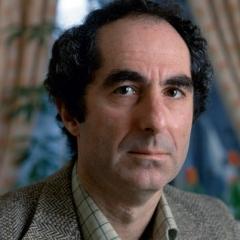
Author

Philip Roth
Philip Roth

Philip Roth (1933-2018) was one of America's most influential contemporary novelists, renowned for his profound explorations of Jewish-American identity, sexuality, politics, and the human condition. His breakthrough work, "Portnoy's Complaint" (1969), became a landmark in American literature. Roth received two National Book Awards and was a multiple-time Pulitzer Prize finalist. Over his six-decade career, he published more than 30 books that significantly shaped American fiction. He passed away in New York City on May 22, 2018, at age 85. more

You May Also Like

“Freeman was a damn good prosecutor but in my view she didn’t play fair. A trial was supposed to be a spirited contesting of facts and evidence. Both sides with equal footing in the law and the rules of the game. But using the rules to hide or withhold facts and evidence was the routine with Freeman. She liked a tiled game. She didn’t carry the light. She didn’t even see the light.”

“How the jury responds to a victim is an enormous percentage of the verdict in any sex crimes trial–which is why prosecutors want Good Victims. In New York City, Good Victims have jobs (like stockbroker or accountant) or impeccable status (like a policeman’s wife); are well educated and articulate, and are, above all, presentable to a jury; attractive–but not too attractive, demure–but not pushovers. They should be upset–but in good taste–not so upset that they become hysterical. And they must have 100 percent trust and faith in the prosecutor, so that whatever the ADA decides to do with the case is fine with them. The criteria for a Good Victim varies with locale. In the Bible Belt, for example, the profile would be a “Christian Woman.” But the general principle remains the same. Such attitudes are not only distasteful, they are also frightening. They say that it’s O.K. to rape some people–just not us. Old-time convicts spell justice “just us”–prosecutors aren’t supposed to. Sex-crimes prosecutors are supposed to understand that the only way to keep the wolf from our own door isn’t to throw him fresh meat but to stop him the first time he darkens anybody’s door.”

“In criminal proceedings, laymen might assume it's one person versus another, but it's not—it's the state versus the defendant. That means that you, the victim, do not have anyone on your side by default, while defendants have lawyers who are eager to tear into you from all angles. You are an asset to the state's case, not the other way around.”