“I contemplated her, seeing her young bland face looking at me, now removed as if behind a gauze curtain. She quietly invited me to suffer. There was a great space now, a great silent hall in which this suffering could take place. There was no urgency now, nothing to plan, nothing to achieve. What shall I do with it, I asked her, what shall I do now with my love for you which you so terribly revived by reappearing in my life? Why did you come back, if you could not content me? What can I do now with the great useless machine of my love which has no wholesome work to do? I can do nothing for you any more, my darling. I wondered if I would be fated to live with this love, making of it a shrine which could not now be desecrated. Perhaps when I was living alone and being everyone's uncle like a celibate priest I would keep this fruitless love as my secret chapel. Could I then learn to love uselessly and unpossessively and would this prove to be the monastic mysticism which I had hoped to attain when I came away to the sea?”
Quote by Iris Murdoch
Work
This novel is a rich tapestry of interconnected narratives that delve into the complexities of human experience. Set in the early 20th century, it follows the lives of a group of individuals connected to a theater company. The story is characterized by its exploration of themes such as memory, art, and the fleeting nature of time. The author employs a unique narrative structure that intertwines the lives of these characters, creating a deeply moving and introspective work. more
Author
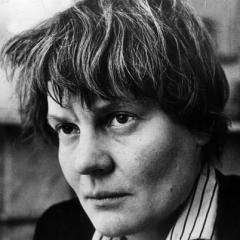
Iris Murdoch was an Irish-Canadian philosopher and author, born on July 15, 1919, in Dublin, Ireland, and passed away on February 8, 1999. She is celebrated for her philosophical novels that intertwine moral and ethical dilemmas with complex narratives. Murdoch's work has left a lasting impact on the literary world, particularly in the latter half of the 20th century. more
You May Also Like
“But I had come to where I had never been before, the blessed point of sufficient desperation.”
“Who is one's first love? Who indeed.”
“But these speculations are too nightmarish. Better to feel 'I shall never know'.”
“Yes of course I was in love with my own youth. Aunt Estelle? Not really. Who is one's first love?”