“HAMM: In my house. (pause.) One day you’ll be blind, like me. You’ll be sitting there, a speck in the void, in the dark, for ever, like me. (pause.) One day you’ll say to yourself, I’m tired, I’ll sit down, and you’ll go and sit down. Then you’ll say, I’m hungry, I’ll get up and get something to eat. But you won’t get up. You’ll say, I shouldn’t have sat down, but since I have I’ll sit on a little longer, then I’ll get up and get something to eat. But you won’t get up and you won’t get anything to eat. (pause.) You’ll look at the wall a while, then you’ll say, I’ll close my eyes, perhaps have a little sleep, after that I’ll feel better, and you’ll close them. And when you open them again there’ll be no wall any more. (pause.) Infinite emptiness will be all around you, all the resurrected dead of all the ages wouldn’t fill it, and there you’ll be like a little bit of grit in the middle of the steppe. (pause.) Yes, one day you’ll know what it is, you’ll be like me, except that you won’t have anyone with you, because you won’t have had pity on anyone and because there won’t be anyone left to have pity on. (pause.)”
Quote by Samuel Beckett
Book:Endgame
Work
Endgame
Endgame is a gripping narrative that explores the moral and ethical dilemmas faced by individuals and societies during a catastrophic event. The story follows a diverse cast of characters as they navigate the end of the world, challenging readers to confront their own values and beliefs. more
Author
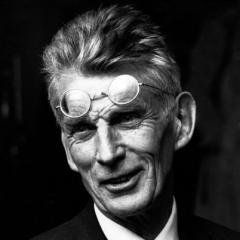
Samuel Beckett
Samuel Beckett was an Irish novelist, playwright, and poet, widely regarded as one of the most influential writers of the 20th century. His works are characterized by their minimalist style, existential themes, and use of language. His most famous works include 'Waiting for Godot' and 'Molloy'. Beckett was awarded the Nobel Prize in Literature in 1969. more
You May Also Like
“It is midnight. Rain is beating against the window." It was not midnight. It was not raining.”
Source: Fighting MSA: Austin Crawford's Story
Source: The Agony of Power
Source: Endgame
Source: Be Slightly Evil: A Playbook for Sociopaths