Quotessence
Home / Quotes / Quote by Eduardo Galeano

Quote by Eduardo Galeano

“Fleas dream of buying themselves a dog, and nobodies dream of escaping poverty: that one magical day good luck will suddenly rain on them-will rain down in buckets. But good luck doesn’t rain down yesterday, today, tomorrow, or ever. Good luck doesn’t even fall in a fine drizzle, no matter how hard the nobodies summon it, even if their left hand is tickling, or if they begin the new day with their right foot, or start the new year with a change of brooms. The nobodies: nobody’s children, owners of nothing. The nobodies: the no ones, the nobodied, running like rabbits, dying trough life, screwed every which way. Who are not, but could be. Who don’t speak languages, but dialects. Who don’t have religions, but superstitions. Who don’t create art, but handicrafts. Who don’t have culture, but folklore. Who are not human beings, but human resources. Who do not have faces, but arms. Who do not have names, but numbers. Who do not appear in the history of the world, but in the police blotter of the local paper. The nobodies, who are not worth the bullet that kills them.”

Quote by Eduardo Galeano

Work

The Book of Embraces

Browse quotes and source details for this work. more

Author
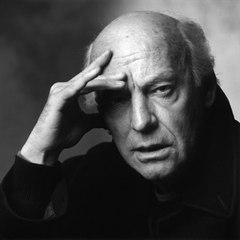
Eduardo Galeano
Eduardo Galeano

Eduardo Galeano was a Uruguayan journalist, writer, and intellectual, renowned for his insightful exploration of Latin American history, politics, and culture. His work as a journalist and his influential books have made him a significant figure in Latin American literature. more

You May Also Like

“La mala racha" Mientras dura la mala racha pierdo todo. Se me caen las cosas de los bolsillos y de la memoria: pierdo llaves. lapiceras, dinero, documentos, nombres, caras, palabras. Yo no se si será gualicho de alguien que me quiere mal y me piensa peor, o pura casualidad, pero a veces el bajón demora en irse y yo ando de pérdida en pérdida, pierdo lo que encuentro, no encuentro lo que busco, y siento mucho miedo de que se me caiga la vida en alguna distracción. "When Luck Runs Out” During streaks of bad luck, I lose everything. Things fall out of my pockets and my memory: I lose keys, pens, money, documents, names, faces, words. I don’t know whether someone wishes me harm and has put the evil eye on me or whether it’s pure happenstance, but sometimes this slump just won’t end and I lose one thing after another. I lose what I find, I can’t find what I’m looking for, and I’m quite afraid of losing life through some little hole in my pocket.” Eduardo Galeano: El libro de los abrazos (The Book of Embraces)”

“Curious People Soledad, five, daughter of Juanita Fernandez: “Why don’t dogs eat dessert?” Vera, six, daughter of Elsa Villagra: “Where does night sleep? Does night sleep here under the bed?” Luis, seven, son of Francisca Bermudez: “Will God be angry if I don’t believe in him? I don’t know how to tell him.” Marcos, nine, son of Silvia Awad: “If God made himself, how did he make his back?” Carlitos, forty, son of Maria Scaglione: “Mama, how old was I when you weaned me? My psychiatrist wants to know.”

“Da Un Amore di Fine Secolo. In un palco di proscenio alla Metropolitan Oper House di New York. Frank Raleigh sedeva alle spalle di Camille e, come ipnotizzato, faceva correre con lentezza gli occhi su quanto la sua vantaggiosa posizione gli offriva. Capelli di seta, una nuca da accarezzare, spalle tonde e perfette, una schiena elegante e sinuosa avvolta in un abito che, nella sua mente, Camille avrebbe dovuto indossare solo per lui e poi togliersi, solo per lui. Ma era sul collo di Camille che il desiderio di Frank Raleigh si era soffermato durante il primo atto di Traviata: così delicato e bianco, un’irresistibile tentazione per le sue labbra. Il valzer finì, l’atto finì, il sipario si chiuse. E, per una frazione di secondo, il teatro fu avvolto da un buio morbido come il velluto. Fu in quel momento di totale, invitante oscurità, che Frank Raleigh agì con l’istinto aggressivo del predatore che era. Calò le labbra sul collo di Camille e ne assaporò senza delicatezza la morbidezza e il profumo, lasciandole un segno rosso e umido di desiderio sulla pelle. Nel buio del teatro risuonò un esterrefatto e alquanto sgomento «Oh!» E quando dai globi di cristallo la luce riapparve tremula a illuminare la grande platea, Frank Raleigh sorrise fra sé, soddisfatto del suo gesto sconsiderato e poco signorile. Perché, nell’espressione di Camille, che ora lo fronteggiava rossa in viso, furiosa e intimorita, aveva percepito la luce inconfondibile del piacere. «Non osate mai più fare una cosa del genere» sibilò lei a labbra strette, mentre con la stola di seta tentava di celare il marchio che le labbra di Raleigh le avevano impresso sulla pelle. «Al contrario, oserò ancora» sussurrò lui, piegandosi appena appena verso di lei mentre applaudendo fingeva entusiasmo per gli artisti. «E non immaginate neppure quanto vi piacerà.»”

“On the whole, scientific methods are at least as important results of investigation as any other results, for the scientific spirit is based upon a knowledge of method, and if the methods were lost, all the results of science could not prevent the renewed prevalence of superstition and absurdity. Clever people may learn as much as they like of the results of science, but one still notices in their conversation, and especially in the hypotheses they make, that they lack the scientific spirit; they have not the instinctive distrust of the devious courses of thinking which, in consequence of long training, has taken root in the soul of every scientific man. It is enough for them to find any kind of hypothesis on a subject, they are then all on fire for it, and imagine the matter is thereby settled. To have an opinion is with them equivalent to immediately becoming fanatical for it, and finally taking it to heart as a conviction. In the case of an unexplained matter they become heated for the first idea that comes into their head which has any resemblance to an explanation—a course from which the worst results constantly follow, especially in the field of politics. On that account everybody should nowadays have become thoroughly acquainted with at least one science, for then surely he knows what is meant by method, and how necessary is the extremest carefulness.”

“If I live to be very old, all my memories of the glory days will grow vague and confused, till I won't be certain any of it really happened. But the books will be there, on my shelves and in my head - the one enduring reality I can be certain of till the day I die. Of all the gifts in Q's legacy, the first still mattered most and would matter longest. If it took me a lifetime to learn that, Q won't mind. He knows I was never a very bright pupil.”

“A precursor to the Social Darwinists, Hobbes argued from th premise that the primordial human condition was a war fought by each against each, so brutal and incesssant that it was impossible to develop industry or even agriculture or the arts while that condition persisted. It's this description that culmintes in his famous epithet "And the life of man, solitary, poor, brutish, and short." It was a fiction to which he brought to bear another fiction, that of the social contract by which men agree to submit to rules and a presiding authority, surrendering their right to ravage each other for the sake of their own safety. The contract was not a bond of affection or identification, bot a culture or religion binding togetehr a civilization, only a convenience. Men, in his view, as in that of many other European writers of the period, are stark, mechanical creatures, windup soldiers social only by strategy and not by nature...”