Quotessence
Home / Quotes / Quote by Paloma Faith

Quote by Paloma Faith

Work

MILF: Motherhood, Identity, Love and F*ckery

Browse quotes and source details for this work. more

Author
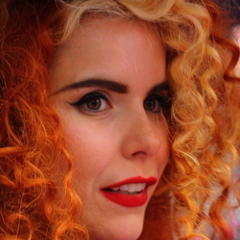
Paloma Faith
Paloma Faith

Paloma Faith is a British singer-songwriter known for her distinctive voice and personalized musical style. Born on July 21, 1981, she has achieved significant success in the music industry since the release of her debut album 'Do You Want the Truth or Something Beautiful?' in 2009. more

You May Also Like

“If there is any such thing as a sign, if there is anything compassionate in the brutality that is being alive... I reach forward and brush my fingers against the spine. A book I had not considered before, not in any real seriousness, as an instructional. A way of life that is not quiet or secret or tucked away. How silly of me. How silly of us, to think we must do in shadow what men do in the light. What they have always done. How blind I have been.”

“Oh, I’m a female and I believe that everybody should definitely have their rights,” she said. “I don’t care if you’re Black, white, straight, gay, women, men, whatever. I think everybody that has something to offer should be allowed to give it and be paid for it. But, no, I don’t consider myself a feminist, not in the term that some people do, because I just think we all should be treated with respect.” Her answer might break your heart if, like me, you speak the language of college-educated activists. But I speak another language, too —poor country— and can attest that as an independent teenager in small-town Kansas who believed women and men should receive equal treatment, I might have given a similar answer. So much of what ails our country now, politically, is that we do not share a common set of definitions. In the context of her native class, Parton’s gift to young women is not a statement but an example. One wishes for both from a hero. But, if I could only have one of the two, I’d pick the latter.”

“That evening at Steinem’s talk on the University of Texas campus, I was struck by her explanation for how such venomous misogyny could overrun the presidential election in 2016. The moment a woman is statistically most likely to be murdered by her male abuser, Steinem pointed out, is when she escapes. Losing control of her is the unbearable threat that makes the violent ex-husband snap. Expanding this idea to a patriarchy losing control of half of the U.S. population would indeed explain a lot about recent years: Abortion provider George Tiller’s murder in Wichita in 2009, Hillary Clinton’s treatment and loss in 2016, the reliable track record of violence against and hatred toward women among male perpetrators of this century’s mass-shooting epidemic. It would explain, too, perhaps, how a self-possessed, powerful woman like Parton gets turned into a boob joke. Like Steinem, Parton is an icon of American womanhood in the twentieth century, still going full force today, perhaps with the energy other women their age who made more orthodox decisions must offer to their grandchildren. Steinem did not come from wealth, but the two women nonetheless had different experiences of socioeconomic class: one went to college, and one took a guitar to Nashville. In different ways and with different tacks, they both charted the course for us to nominate a woman for president in 2016.”

“Feminism and all movements for social progress inevitably contain a gap between what’s on paper and what’s really going on: between the feminism proclaimed and the feminism enacted, the women’s rights legislated and the women’s rights enforced, the progress in policy and the progress in culture. Women of Generation X, of which I represent the youngest contingent, had more freedom than their mothers in meaningful ways. We were the first full beneficiaries of Title IX protections guaranteeing access to education and outlawing sexual discrimination in the workplace. We were entering our first romantic partnerships as the Violence Against Women Act became law. But the cultural cues we received growing up were full of gaps and dissonance.”

“Working-class women might not be fighting for a cause with words, time, and money they don’t have, but they possess an unsurpassed wisdom about the way gender works in the world. Take, for example, the concept of intersectionality. A working-class woman of color might not know that word, but she knows better than anyone how her race, gender, and economic struggles intertwine. There is, then, intellectual knowledge—the stuff of research studies and think pieces—and there is experiential knowing. Both are important, and women from all backgrounds might possess both. But we rarely exalt the knowing, which is the only kind of feminism many working women have.”

“It occurred to me that Mr. Whitmore seemed to have no doubts about my ability to take part in this mission. I was, to him, a competent and required presence. Not a worthless, overbearing spinster or deficient female. Was this how men felt all the time? This intrinsic acceptance of one’s significance? No wonder they walked through life expecting so much as their due.”

“But art can abstract us from the demands placed on our bodies at any given time. It can remind us that we do not only exist in relation to our gendered responsibilties: we are not only someone’s mother or sister, or carer — we are individuals brimming with sophisticated ideas. Creativity is at the heart of any new world we seek to build.”