Quotessence
Home / Quotes / Quote by Thomas Harris

Quote by Thomas Harris

Work

Red Dragon

In this gripping thriller, the protagonist, a young FBI agent, becomes entangled in a dangerous pursuit as he tries to stop a notorious serial killer known as the Tooth Fairy. The story is a psychological examination of the killer's motivations and the agent's determination to bring him to justice. more
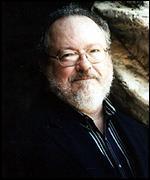
Author

Thomas Harris
Thomas Harris

Thomas Harris, born on April 11, 1940, is a renowned American author known for his psychological thrillers. His most famous works include 'The Red Dragon', 'The Silence of the Lambs', and 'Hannibal'. more

You May Also Like

“All of this was too much. I tried to remember my life back at HDF, when I was a boring human in love with my best friend, who I thought didn't feel the same. And I thought that was complicated. Now my best friend was part fae, connected to the man I brought back to life because of powers shoved into me from an evil queen, a cursed witch, and a probably half insane Dae. The same person trying to kill me now. We all were being babyset by a dead druid, using the body of an old gypsy seer who had been shot multiple times tonight. "My life." I scoured at my face in utter disbelief, realizing I hadn't even gone into my friends standing around me and all their issues.”

“They asked for Plato's assistance. He told them: "You hated wisdom and ran away from geometry, therefore God has afflicted you a punishment, for wisdom and philosophical knowledge have a high rank with God." ... The plague was lifted and they ceased to defame the branches of theoretical knowledge.”

“Science proceeds by inference, rather than by the deduction of mathematical proof. A series of observations is accumulated, forcing the deeper question: What must be true if we are to explain what is observed? What "big picture" of reality offers the best fit to what is actually observed in our experience? American scientist and philosopher Charles S. Peirce used the term "abduction" to refer to the way in which scientists generate theories that might offer the best explanation of things. The method is now more often referred to as "inference to the best explanation." It is now widely agreed to be the philosophy of investigation of the world characteristic of the natural sciences.”

“Today we demand justice for the oppressed. We no longer accept atrocities as the inescapable fate of the defenceless. We desire and expect a better future. But when confronted with the enormity of injustice and what it demands of us, we retreat into the familiar ritual of intellectualization and moral posturing, recycling lofty liberal ideals from a safe distance. We avoid the intimate knowledge of suffering without which we will never understand the imperative of human rights.”