“When a serious felony case went to trial in a county like Monroe County, which was 40 percent black, it was not uncommon for prosecutors to exclude all African Americans from jury service. In fact, twenty years after the civil rights revolution, the jury remained an institution largely unchanged by the legal requirements of racial integration and diversity. As far back as the 1880s, the Supreme Court ruled in Strauder v. West Virginia that excluding black people from jury service was unconstitutional, but juries remained all-white for decades afterward. In 1945, the Supreme Court upheld a Texas statute that limited the number of black jurors to exactly one per case. In Deep South states, jury rolls were pulled from voting rolls, which excluded African Americans. After the Voting Rights Act passed, court clerks and judges still kept the jury rolls mostly white through various tactics designed to undermine the law. Local jury commissions used statutory requirements that jurors be "intelligent and upright" to exclude African Americans and women. In the 1970s, the Supreme Court ruled that underrepresentation of racial minorities and women in jury pools was unconstitutional, which in some communities at least led to black people being summoned to the courthouse for possible selection as jurors (if not selected). The Court had repeatedly made clear, though, that the Constitution does not require that racial minorities and women actually serve on juries—it only forbids excluding jurors on the basis of race or gender.”
Quote by Bryan Stevenson
Book:Just Mercy
Work
Just Mercy
Browse quotes and source details for this work. more
Author
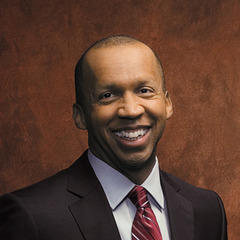
Bryan Stevenson
Bryan Stevenson is an American lawyer, educator, and social activist known for his contributions to criminal justice reform and the defense of the rights of the poor. Born on November 14, 1959, Stevenson is a professor at the University of Alabama at Birmingham School of Law. more
You May Also Like
Source: HOA Wire
Source: HOA Wire
“You never know with juries. I’d take a judge every time, unless of course I was guilty.”
Source: Unreasonable Force
Source: The Spy Files
Source: Jaulah Sampai Syurga
Source: The Bhagavad Gita
Source: TRUTH OF LOVE: Our life is based on the premise of love
Source: Storm's Heart
Source: The Best American Nonrequired Reading 2002