“There seemed no answer. He wasn't resigned to anything, he hadn't accepted or adjusted to the life he'd been forced into. Yet here he was, eight months after the plague's last victim, nine since he's spoken to another human being, ten since Virginia had died. Here he was with no future and a virtually hopeless present. Still plodding on. Instinct? Or was he just stupid? Too unimaginative to destroy himself? Why hadn't he done it in the beginning when he was in the very depths? What had impelled him to enclose the house, install a freezer, a generator, an electric stove, a water tank, build a hothouse, a workbench, burn down the houses on each side of his, collect records and books and mountains of canned supplies, even - it was fantastic when you thought about it - even put a fancy mural on the wall? Was the life force something more than words, a tangible, mind-controlling potency? Was nature somehow, in him, maintaining its spark against its own encroachments? He closed his eyes. Why think, why reason? There was no answer. His continuance was an accident and an attendant bovinity. He was just too dumb to end it all, and that was about the size of it.”
Quote by Richard Matheson
Work
In this classic science fiction tale, the protagonist, Robert Neville, is the last human in a world where vampires have taken over. Living in a fortified home, Neville conducts experiments to find a cure for the virus that has turned humans into vampires. The novel delves into themes of isolation, survival, and the human condition. more
Author
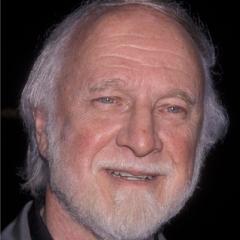
Richard Matheson was an American author renowned for his science fiction and horror novels. His works spanned a variety of literary genres, including novels, short stories, and television scripts. Matheson's writing career began in the mid-20th century, and he rose to prominence in the science fiction and horror literary communities. Many of his works have been adapted into films and television shows, such as 'The Night of the Living Dead' and 'The Shrinking Man'. His novel 'The Night of the Living Dead' was first published in 1962 and later adapted into the eponymous film, achieving great success. His short story collection 'The Shrinking Man' was also adapted into a film, further solidifying his reputation. more
You May Also Like
“Stretched by an idea, we can aspire to new heights, new ways of thinking.”
“We are not our thought we are just prisoner of our Identification of thought”