Quotessence
Home / Quotes / Quote by Fritz Leiber

Quote by Fritz Leiber

“So tell me, giant philosopher, why we're not dukes," the Gray Mouser demanded, unrolling a forefinger from the fist on his knee so that it pointed across the brazier at Fafhrd. "Or emperors, for that matter, or demigods." "We are not dukes because we're no man's man," Fafhrd replied smugly, settling his shoulders against the stone horse-trough. "Even a duke must butter up a king, and demigods the gods. We butter no one. We go our own way, choosing our own adventure—and our own follies! Better freedom and a chilly road than a warm hearth and servitude." "There speaks the hound turned out by his last master and not yet found new boots to slaver on," the Mouser retorted with comradely sardonic impudence. "Look you, you noble liar, we've labored for a dozen lords and kings and merchants fat. You've served Movarl across the Inner Sea. I've served the bandit Harsel. We've both served this Glipkerio, whose girl is tied to Ilthmar this same night." "Those are exception," Fafhrd protested grandly. "And even when we serve, we make the rules. We bow to no man's ultimate command, dance to no wizard's drumming, join no mob, hark to no wildering hate-call. When we draw sword, it's for ourselves alone.”

Quote by Fritz Leiber

Work

Swords in the Mist

This book is a work of fantasy, where the misty setting serves as a backdrop for tales of swordsmanship and exploration. The story likely involves characters embarking on quests or duels amidst an enigmatic environment. more

Author
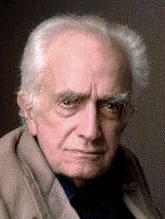
Fritz Leiber
Fritz Leiber

Fritz Leiber was an American film writer known for his fantasy and science fiction works. His unique style and engaging storytelling have made him a beloved author among readers. more

You May Also Like

“[The Soviet State Security Service] is more than a secret police organization, more than an intelligence and counter-intelligence organization. It is an instrument for subversion, manipulation and violence, for secret intervention in the affairs of other countries.”

“На земјата ѝ е гајле дали ние ќе ја сакаме или ќе ја пцуеме. Таа ни се издра, нѐ смачка и нѐ погреба живи. Дали скопјани ќе останат овде или не, тоа е наш, а не нејзин проблем. Земјата само мрзливо ќе си ги мрда своите плешки, својата одвратна утроба со недели, сѐ додека не ѝ стане удобно. Потоа пак ќе нѐ пушти да правиме што сакаме. И нема да ѝ биде жал. И арогантно ќе нѐ чека сите да завршиме во неа.”

“The needs and aspirations which during the Twenties had driven men to religion or the occult were transmuted during the decade which followed. As objects of devotion the gurus gave way to the political masters. But the vocabulary and the modes of thought employed by some of the idealistic politicians were profoundly influenced by their previous experience of the occult underground. In certain cases, whole ideological positions were taken over from occultism, and the underground became an underground no longer.”

“Hope and fear come from feeling that we lack something; they come from a sense of poverty. We can’t simply relax with ourselves. We hold on to hope, and hope robs us of the present moment. We feel that someone else knows what's going on, but that there's something missing in us, and therefore something is lacking in our world.”

“You are one of the few successful persons I know." "Me? Why?" "You know precisely what you are doing and you do it well." "But I don't really do much of anything." "And of course the quantity means nothing to you, nor the weight others place upon your actions. In my eyes, that makes you a success." "By not giving a damn? But I do, you know." "Of course you do, of course you do! But it is a matter of style, an awareness of choice—”

“Osiris, to go directly to the important part of this, was not a "dying god," not "life caught in the spell of death," or "a dead god," as modern interpreters have said. He was the hallucinated voice of a dead king whose admonitions could still carry weight. And since he could still be heard, there is no paradox in the fact that the body from which the voice once came should be mummified, with all the equipment of the tomb providing life's necessities: food, drink, slaves, women, the lot. There was no mysterious power that emanated from him; simply his remembered voice which appeared in hallucination to those who had known him and which could admonish or suggest even as it has before he stopped moving and breathing. And that various natural phenomena such as the whispering of waves could act as the cue for such hallucinations accounts for the belief that Osiris, or the king whose body has ceased to move and is in his mummy cloths, continues to control the flooding of the Nile. Further, the relationship between Horus and Osiris, 'embodied' in each new king and his dead father forever, can only be understood as the assimilation of an hallucinated advising voice into the king's own voice, which then would be repeated with the next generation.”