Quotessence
Home / Quotes / Quote by F. Scott Fitzgerald

Quote by F. Scott Fitzgerald

“If I hurt your feelings we ought to discuss it. I don't like this kiss-and-forget.' 'But I don't want to argue. I think it's wonderful that we can kiss and forget, and when we can't it'll be time to argue.”

Quote by F. Scott Fitzgerald

Work

The Beautiful and Damned

F. Scott Fitzgerald's 'The Beautiful and Damned' is a narrative about the unraveling of a marriage between Anthony Patch and his wife, Gloria. Set in the lavish and decadent world of the 1920s, the story delves into themes of wealth, excess, and the disintegration of the American Dream. The novel is known for its vivid portrayal of the era's social and moral decay, and its complex characters who are both admired and criticized for their lifestyles. more

Author
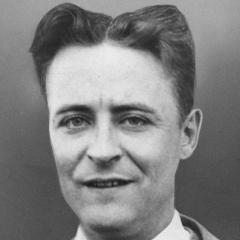
F. Scott Fitzgerald
F. Scott Fitzgerald

F. Scott Fitzgerald was an American author of novels and short stories, renowned for his works that encapsulate the Jazz Age and the Roaring Twenties. His most celebrated novel, 'The Great Gatsby,' is a critical and commercial success, reflecting the themes of the American Dream and the decline of the American upper class. more

You May Also Like

“Because he is good and kind,” she explained softly, then went on. “Because he treats me like a princess. Because he makes me laugh. Because he makes me happy. Because he took the trouble to read to me when I could not read to myself. Because he fed me and gave me wine when I could not eat or drink at balls. Because when he kisses me my toes curl, and when he makes love to me I cannot contain my passion.”

“Some guns were fired to give notice that the departure of the balloon was near. ... Means were used, I am told, to prevent the great balloon's rising so high as might endanger its bursting. Several bags of sand were taken on board before the cord that held it down was cut, and the whole weight being then too much to be lifted, such a quantity was discharged as would permit its rising slowly. Thus it would sooner arrive at that region where it would be in equilibrio with the surrounding air, and by discharging more sand afterwards, it might go higher if desired. Between one and two o'clock, all eyes were gratified with seeing it rise majestically from above the trees, and ascend gradually above the buildings, a most beautiful spectacle. When it was about two hundred feet high, the brave adventurers held out and waved a little white pennant, on both sides of their car, to salute the spectators, who returned loud claps of applause. The wind was very little, so that the object though moving to the northward, continued long in view; and it was a great while before the admiring people began to disperse. The persons embarked were Mr. Charles, professor of experimental philosophy, and a zealous promoter of that science; and one of the Messrs Robert, the very ingenious constructors of the machine. {While U.S. ambassador to France, writing about witnessing, from his carriage outside the garden of Tuileries, Paris, the first manned balloon ascent using hydrogen gas by Jacques Charles on the afternoon of 1 Dec 1783. A few days earlier, he had watched the first manned ascent in Montgolfier's hot-air balloon, on 21 Nov 1783.}”