Quotessence
Home / Quotes / Quote by Rod Serling

Quote by Rod Serling

Author

Rod Serling
Rod Serling

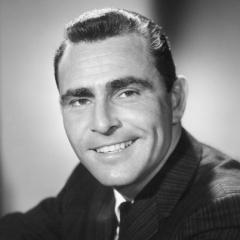
Rod Serling (December 25, 1924 – June 28, 1975) was an American screenwriter, producer, and television pioneer best known for creating the iconic anthology series The Twilight Zone. Born in Syracuse, New York, he served in the U.S. Army's 11th Airborne Division during World War II, an experience that deeply influenced his writing. After the war, he studied at Antioch College and began his career in television. Serling's work often explored social issues, human nature, and morality through science fiction and fantasy. He won six Emmy Awards and a Peabody Award. His legacy includes The Twilight Zone, Night Gallery, and numerous teleplays. He died of a heart attack in 1975, but his influence on television storytelling remains profound. more

You May Also Like

“She had thought about how everywhere in that place Romans had written the local people out of their history. She was trying to figure out how people valued a thing, what made something revered while other things were overlooked. Who decided what was out with the old, what had to have a replacement? What traditions stayed and what tools, household items, art, things, evidence of someone, languages, fell away. But when she tried to draw a vague line to the artefacts of Prosperous she was stumped — why the artefacts of Middlesbrough were important and not those from home.”

“She tried to keep herself and her life small and manageable. Much like a poem. The condensing of the wide, unknowable past that runs right up behind them. She doesn’t do that anymore, her life isn’t a poem, she knows it’s a big, big story. Her people go all the way back to the riverbank, and further, after all — the river and what happened at the river was a time traveller, their story has no bounds in time.”

“August wanted to hand the papers back and to tell them everything, draw them close and whisper that their lives had turned out wrong, that she and her family were meant to be powerful, not broken, tell them that something bad happened before any of them was born. Tell them that something was stolen from a place inland, from the five hundred acres where her people lived. She wanted to tell them that the world was all askew and she thought it was because of the artefacts, that she thought they should understand it was all so urgent now, that they knew truths now tell them that she wasn’t extinct, that they didn’t need the exhibition after all.”

“The evidence of their civilisation, after so many years of farming, was difficult to find on the surface of the land. But they said it was embedded in the language of Albert’s dictionary, that with the Reverend’s list and all the words that Albert wrote, and other old people remembering the words too, that it would now be recognised as a resurrected language, brought back from extinction.”