Quotessence
Home / Quotes / Quote by Liane Holliday Willey

Quote by Liane Holliday Willey

“If we are only interested in changing the AS person so that they can better meld themselves into society - a tenuous and nebulous concept to begin with - then perhaps we are misguided. The AS community gives us much cause to celebrate. Never, I think, should we expect or want them to be carbon copies of the most socially adept among us. We should only suggest whatever help they need to insure they have every opportunity of leading productive, rewarding and self-sufficient lives. We would lose too much and they would lose even more, if our goals were anything more, or less.”

Quote by Liane Holliday Willey

Work

Pretending to be Normal: Living with Asperger's Syndrome (Autism Spectrum Disorder) Expanded Edition

This expanded edition delves into the author's experiences with Asperger's Syndrome, providing a comprehensive look at the social, emotional, and cognitive aspects of living on the autism spectrum. The book offers a candid perspective on the daily struggles and triumphs of individuals with Asperger's, aiming to educate and empathize with those affected by the condition. more

Author
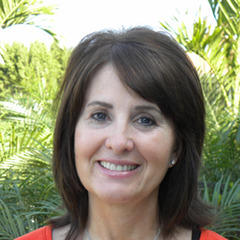
Liane Holliday Willey

Liane Holliday Willey, born in 1959, is a renowned author in the United States. Her works primarily revolve around autism and its impact on personal lives, gaining widespread recognition for her unique perspective and profound insights. more

You May Also Like

“And I think for a moment, because people don't actually ask that very often. They tell me what they think I feel because they've read it in books, or they say incredible things like "autistic people have no sense of humour or imagination or empathy" when I'm standing right there beside them (and one day I'm going to point out that that is more than a little bit rude, not to mention Not Even True) or they -- even worse -- talk to me like I'm about five, and can't understand. "It's like living with all your senses turned up to full volume all the time," I say. "And it's like living life in a different language, so you can't ever quite relax because even when you think you're fluent it's still using a different part of your brain so by the end of the day you're exhausted.”

“Humans are biased machines, and we are especially influenced by negatives. We want to believe the worst about ourselves and will pick those scraps up throughout the day and piece them together until we have something that we can look at and say, 'Look, arent I terrible' even if everyone else says otherwise. Maybe that's just me.”

“Reason excludes faith," Alessandro responded, watching the blood-red mite as it made a dash for the rim. "It's deliberately limited. It won't function with the materials of religion. You can come close to proving the existence of God by reason, but you can't do it absolutely. That's because you can't do anything absolutely by reason. That's because reason depends on postulates. Postulates defy proof and yet they are essential to reason. God is a postulate. I don't think God is interested in the verification of His existence, and, therefore, neither am I. Anyway, I have professional reasons to believe. Nature and art pivot faithfully around God. Even dogs know that.”

“Introversion is also very different from Asperger's syndrome, the autism spectrum disorder that involves difficulties with social interactions such as reading facial expressions and body language.... unlike people with Asperger's, introverts often have strong social skills. Compared with the one third to one half of Americans who are introverts, only one in five thousand people has Asperger's.”

“If I could, I would ask the world to make me skates so that I could find its frozen water and set myself free to smile, laugh, dance and cheer. I'd see the boundaries that would be in a world frozen in its place and they would keep me safe, away from where the waters warm, away from the stares, away from the thoughts that melt and tear. I would ask the world to skate with me, looking at the gladness I had found, knowing, really knowing, there was nothing left to fear. I think then we would be free to live life as we could, with more in common than apart, the fog would lift, the confusion would end and true understanding would hold us dear.”