Quotessence
Home / Quotes / Quote by Ken Follett

Quote by Ken Follett

“Madge s'approcha du buffet, où trônaient une cruche et des bols. Les yeux fixés au mur, elle enchaîna : "Voulez-vous savoir le plus étrange ? Après leur mort, je ne pouvais plus réciter le Notre Père... Fiat voluntas tua : 'Que votre volonté soit faite.' Ces mots, je les comprends, ajouta-t-elle la gorge nouée ; mon père m'a appris le latin. J'étais incapable de les prononcer ! Dieu m'avait enlevé ma famille. La torture était suffisante sans que j'y rajoute de mon propre chef celle de l'approuver." Ses yeux s'embuèrent de larmes au souvenir de cette terrible épreuve. "Je n'avais pas envie que la volonté de Dieu s'accomplisse ; je voulais retrouver mes enfants. 'Que votre volonté soit faite !' A la fin de la prière, je ne pouvais me résoudre à dire : 'Ainsi soit-il', quitte à aller en enfer.”

Quote by Ken Follett

Work

World Without End

This historical novel is a sequel to Ken Follett's 'The Pillars of the Earth' and continues the story of Kingsbridge, a fictional town in England. The book delves into the lives of the descendants of the characters from the first novel, intertwining their fates with the broader historical events of the period. It is known for its intricate plot and richly detailed portrayal of medieval society. more

Author
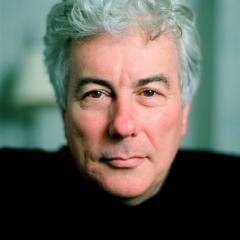
Ken Follett
Ken Follett

Ken Follett is a renowned British author born on June 5, 1949. His works are known for their historical settings and intricate character relationships, which have won him a wide readership. more

You May Also Like

“My parents did their best to feed their children’s bodies, minds, and hearts, every day, whether they felt like it or not. Now that I have had children, I am in awe of how consistently they did this at such a young age, without complaint. They made a commitment to each other and to my brother and myself, and they kept it. I do not know what this cost them. I may never know. But having had children of my own, I know how hard it is some days to do what has to be done. Many of my parents’ generation were raised with a belief that was both curse and blessing: commitments were to be fulfilled, duties carried out. There was no choice. When we are convinced there is no choice, we waste less energy on wondering what to do and railing against that which needs to be done. This is the blessing we have when the rules are clear, the duties delineated. But there is another side to the ease we feel when our duty is laid out for us. If the strict parameters of what is expected do not fit us, we must shape ourselves to meet them, regardless of the costs. My mother, if she did not by nature fit the role of full-time homemaker, successfully managed the Herculean task of bending to meet it, without losing her enthusiasm for life, her ability to experience joy. Other women and their children were not so fortunate. Behind closed doors, within spotless rooms, many of my friends mothers drowned the pain of not living who they were with alcohol and prescription drugs, and they sometimes descended into illness and suicide. Many of the women of my generation are torn apart daily by the choices available to us, choices I am nevertheless grateful to have. When I went to work, I felt worried and guilty about leaving my children at daycare. When I stayed home I thought I would go out of my mind with the mental boredom, the struggle to live without enough money, and the worry that I would never be able to go back into the workplace and make a living. I had inherited my parents’ values in a world with so many more choices and demands, plus my own expectations that I could, and should, develop my own interests and talents. So, I tried to do it all - to keep a house and care for my children according to the standards required of a full-time homemaker, to attend classes to develop my skills, and to work to provide money and financial security. And I got sick – very, very sick. One of the gifts of lying on the floor too ill to get up with two young children to look after is the ease and clarity with which you know what really does have to be done. No, when I work with men and women who are worn out with too much work and worry, you tell me all the things they have to do, I tell them, “You know, very little actually has to be done.” I found out when I was ill that cookies do not have to be baked, floors do not have to be spotless, PTA meetings do not have to be attended, the dish drainer does not have to be emptied, meals do not have to be exotic and innovative. Too ill to do anything that did not have to be done, I did the impossible: I lowered my standards.”

“When you bury a parent, you lower his or her casket into the ground, but the history between you lives on. The funeral is an ending, yes, but it is also a beginning - the start of a true reckoning with those hurts between you that must be laid to rest. When we buried my mother, I mourned her then and in the years that followed. As I grieved, I thought I'd long since come to terms with my father - with how he'd both delighted and failed me, with the ways in which he'd unknowingly bruised me just as all parents do, despite their best intentions.”

“When I am saying all of this, she is just looking at me and I am seeing water in her eye. So I am saying to her, if I am telling this to you it will be making you to think that I am some sort of beast or devil. Amy is never saying anything when I am saying this, but the water is just shining in her eye. And I am saying to her, fine. I am all of this thing. I am all of this thing, but I am also having mother once, and she is loving me.”

“Judge Appleton White criticized the New England elite for not helping these new immigrants. He thought we should be educating them. These immigrants, like any new wave of immigrants, I believe, represent the values of hard work and self-reliance that founded this country. From White’s memoir, I made the connection in my lecture to the scapegoating that Latin American immigrants face today. This is an old, cyclical story in which people make it here and then they decide to close the doors behind them. The story is repeated whether you’re English, Irish, Jewish, or Latin American immigrants. But these new immigrants, whoever they are, should remind those already here, what it took to make it in America, what desire burned in these immigrants to never give up, and what kind of hope these newcomers had, despite the dangers. These are the best American values. I wanted to write about the new pilgrims of this country — nobody’s children. These people—like Turi, Molly, and Arnulfo—who represent the best values of this country. The values of trying to make it on your own. The values of fighting for your place. The values of helping each other. These are the basic values that started this country and served as its foundation. But too often we have forgotten them, and where these values came from. And this working to become American, to find your place, instead of assuming your privileged place, this is Aristotle through and through. For Aristotle, you need to work and to act to find meaning in the idea of the good. An American who is growing fat and happy in Dallas, or anywhere else, will not have that practical, in-the-trenches Aristotelian understanding of what it takes to belong after a long struggle, like a new immigrant.”

“I thought you'd want the honor of taking down Martino." "Oh, hell yes." "Then what's with the look?" "It just occured to me that as U.S. attorney, you're now in a position of authority over me." Cameron raised an eyebrow. "Yuo're right, Agent Pallas. There is a new sheriff in town." "Cute. How long have you been waiting to say that?" (Jack & Cameron)”

“So you’re saying the ball’s in my court.” He bent his head, stopping just before his mouth touched hers. “The ball has always been in your court, Jessica,” he said huskily. “From the first moment I walked up to you at the Academy.” She looked at him for a moment. Then she stood up on her tiptoes and leaned into him. The instant her lips touched his, John slid one hand to her waist and threaded the other in her hair. About damn time.”