Quotessence
Home / Quotes / Quote by Chinua Achebe

Quote by Chinua Achebe

“If we have any role at all, I think it’s the role of optimism, not blind or stupid optimism, but the kind which is meaningful, one that is rather close to that notion of the world which is not perfect, but which can be improved. In other words, we don’t just sit and hope that things will work out; we have a role to play to make that come about.”

Quote by Chinua Achebe

Author
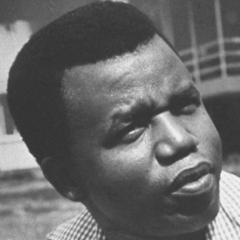
Chinua Achebe
Chinua Achebe

Nigerian novelist, poet, literary critic, widely regarded as one of the greatest African writers of the 20th century. Chinua Achebe is known for his profound insights into colonialism and African culture, with works such as 'Things Fall Apart' and 'Arrow of God'. more

You May Also Like

“But there is a way of despising the dandelion which is not that of the dreary pessimist, but of the more offensive optimist. It can be done in various ways; one of which is saying, "You can get much better dandelions at Selfridge's," or "You can get much cheaper dandelions at Woolworth's." Another way is to observe with a casual drawl, "Of course nobody but Gamboli in Vienna really understands dandelions," or saying that nobody would put up with the old-fashioned dandelion since the super-dandelion has been grown in the Frankfurt Palm Garden; or merely sneering at the stinginess of providing dandelions, when all the best hostesses give you an orchid for your buttonhole and a bouquet of rare exotics to take away with you. These are all methods of undervaluing the thing by comparison; for it is not familiarity but comparison that breeds contempt. And all such captious comparisons are ultimately based on the strange and staggering heresy that a human being has a right to dandelions; that in some extraordinary fashion we can demand the very pick of all the dandelions in the garden of Paradise; that we owe no thanks for them at all and need feel no wonder at them at all; and above all no wonder at being thought worthy to receive them. Instead of saying, like the old religious poet, "What is man that Thou carest for him, or the son of man that Thou regardest him?" we are to say like the discontented cabman, "What's this?" or like the bad-tempered Major in the club, "Is this a chop fit for a gentleman?" Now I not only dislike this attitude quite as much as the Swinburnian pessimistic attitude, but I think it comes to very much the same thing; to the actual loss of appetite for the chop or the dish of dandelion-tea. And the name of it is Presumption and the name of its twin brother is Despair. This is the principle I was maintaining when I seemed an optimist to Mr. Max Beerbohm; and this is the principle I am still maintaining when I should undoubtedly seem a pessimist to Mr. Gordon Selfridge. The aim of life is appreciation; there is no sense in not appreciating things; and there is no sense in having more of them if you have less appreciation of them.”

“I shall not assess arguments and evidence for competing views about when human extinction will occur. We know it will occur, and this fact has a curious effect on my argument. In a strange way it makes my argument an optimistic one. Although things are now not the way they should be—there are people when there should be none—things will someday be the way they should be—there will be no people. In other words, although things are now bad, they will be better, even if they first get worse with the creation of new people. Some may wish to be spared this kind of optimism, but some optimists may take a measure of comfort in this observation.”

“When you stop expecting people to be perfect, you like them for who they are. And when you stop expecting material possessions to complete you, you'd be surprised how much pleasure you get from material possessions. And when you stop expecting God to end all your troubles, you'd be surprised how much you like spending time with God.”

“The best way we can honor the pioneers—the best way for us to repay our debt of gratitude to them—goes beyond making and hearing speeches, marching in parades, or attending fireworks celebrations. “The best way we can show our gratitude is by incorporating into our own lives the faithfulness to God’s commandments, the compassion and love for our fellowmen, the industry, optimism, and joy the pioneers demonstrated so well in their own lives.”