Quotessence
Home / Quotes / Quote by Robert McKee

Quote by Robert McKee

Work

Author

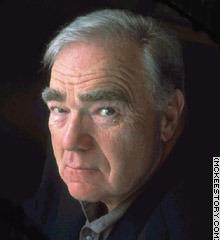
Robert McKee
Robert McKee

Robert McKee (born 1941) is an American author, lecturer, and story consultant, best known for his teachings on narrative structure and screenwriting. He is the author of the influential book "Story: Substance, Structure, Style, and the Principles of Screenwriting" (1997), which has become a standard reference for writers worldwide. McKee founded the "Story Seminar," a workshop series that has been attended by over 100,000 participants globally, including filmmakers, novelists, and business professionals. His work emphasizes the importance of character development, emotional engagement, and structural coherence in storytelling. Despite some criticism for being formulaic, McKee is widely regarded as a pivotal figure in modern narrative theory, with his principles applied across film, television, literature, and corporate communication. more

You May Also Like

“After I implement my new policies in class, I will do the same for peer evaluations. For years, I've been giving my colleagues high (and variable) marks on their teaching, research, and service ratings. But, from now on, I plan to give everyone a five (the scale ranges from one to nine) regardless of what kind of a year they had.”

“One theft, however, does not make a thief . . Action which defines a man, describes his character, is action which has been repeated over and over and so has come in time to be a coherent and relatively independent mode of behavior. At first it may have been fumbling and uncertain, may have required attention, effort, will - as when first drives a car, first makes love, first robs a bank, first stands up against injustice. If one perseveres on any such course it comes in time to require less effort, less attention, begins to function smoothly; its small component behaviors become integrated within a larger pattern which has an ongoing dynamism and cohesiveness, carries its own authority. Such a mode then pervades the entire person, permeates other modes, colors other qualities, in some sense is living and operative even when the action is not being performed, or even considered. . . . Such a mode of action tends to maintain itself, to resist change. A thief is one who steals; stealing extends and reinforces the identity of a thief, which generates further thefts, which further strengthen and deepen the identity. So long as one lives, change is possible; but the longer such behavior is continued the more force and authority it acquires, the more it permeates other constant bodes, subordinates other conflicting modes; changing back becomes steadily more difficult; settling down to an honest job, living on one's earnings becomes ever more unlikely. And what is said here of stealing applies equally to courage, cowardice, creativity . . . or any other of the myriad ways of behaving, and hence of being.”