Quotessence
Home / Quotes / Quote by Jack Ma

Quote by Jack Ma

“You worry, it comes. You don't worry, it comes. So what is the point of worry?”

Quote by Jack Ma

Author
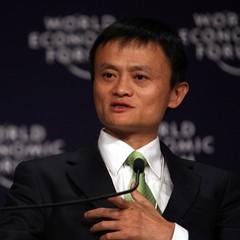
Jack Ma
Jack Ma

Jack Ma is a renowned Chinese entrepreneur and the founder of Alibaba Group. Born on September 10, 1964, in Hangzhou, Zhejiang Province, he graduated from Hangzhou Normal University. With his unique business vision and innovative spirit, Jack Ma successfully created one of the world's largest e-commerce platforms, Alibaba, which has had a profound impact on China's e-commerce and internet industry. more

You May Also Like

“The worry simply means: you are clinging with something which is no more and you are avoiding that which is. That is worry. You know deep down that it is no more, it is gone and you know deep down that the new has come. But still you want to pretend, you want to deceive yourself. And one can deceive oneself; millions of people are deceiving themselves. But that deception simply destroys all the possibilities of being blissful, of being alive, of being celebrating. One creates great anxiety and a great split.”

“She had come to analysis because she was, as she put it, “ruining her children.” ... “But you are so frustrating,” she said. “I want you to take something away from me, and you keep giving it back.” And what, I asked, was that “something” she wanted to give away? “The pain. The crazy,” she said. She said there was a little shrine, somewhere in the north of Brazil. The land was dry, the town impossibly poor, but people would travel for hundreds of miles to get there, to leave candles, gifts, and ex- voto offerings thanking the saint for answered prayers, for healing, for having rescued them from distress. “I bring you my worries. I bring you my tears. I bring you the dreams I have. I want to leave them here. I want to hang them on your wall and return home healed. But everything I give to you, you give back. You say, like you just said, ‘What is this “something” you want to give away?’ ” Years later I looked it up, the shrine. There were many like the one my Brazilian patient had described. One of them was a kind of cave or grotto, where pilgrims would leave little body parts carved from wood or wax: a foot, a breast, a head. From time to time the priest collected the wax objects and melted them down, making candles to be sold to other pilgrims. The walls and ceiling of the shrine were black with candle smoke and crowded with these suspended offerings. I think now that my Brazilian patient managed at least to give that away, the conjured image of a blackened shrine, hung with a jumble of body parts. I think that in the soul of each psychoanalyst such a place must exist, in spite of what we profess about our neutrality, our professional detachment. Perhaps something of what we receive can be melted down and sold back as candlelight— our costly illuminations— but other elements remain just as they appeared, the dreams nailed to the walls, the abandoned hearts and limbs, the soot of inextinguishable longing.”