Quotessence
Home / Quotes / Quote by Ndabaningi Sithole

Quote by Ndabaningi Sithole

“The ideology of white supremacy, based on the subjugation of the black man in Rhodesia, denied the black man his full fundamental human rights and freedoms in his own native land and built a wall between black and white. The blacks decided, as the last resort, tha they were going to shoot down this wall; but the whites decided that this wall was to be maintained at any cost in spite of the glaring injustices inherent in it.”

Quote by Ndabaningi Sithole

Work

Roots of a Revolution: Scenes from Zimbabwe's Struggle

Browse quotes and source details for this work. more

Author
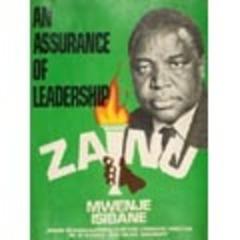
Ndabaningi Sithole
Ndabaningi Sithole

Ndabaningi Sithole was a significant figure in the 20th-century African political stage. Born on July 31, 1920, and passed away on December 12, 2000. Limited information is available, but Sithole played a crucial role in the African liberation movement. more

You May Also Like

“A person is a person through others. This truth extends across time and space. We are through those who have come before us, those who have come with us and those who will come after us. Spirit possession, at the heart of Chimurenga, is an exercise in timelessness. It is those in the present communing with those in the past about the future concerning those who will come. Chimurenga has always been the intergenerational spirit of African self-liberation. It is not linear, it is bones that go into the earth and rise again and again.”

“To understand what happened in Zimbabwe its worth trying to see things through the Zimbabwean people prism for a moment. Immune from the propaganda and the western media mind- bend. The real issues started a long, long time ago before the current regimes. Those who came bearing greed and seeking to rip off the cradle of Sub-Saharan Africa orchestrated the demise the people of Zimbabwe found themselves reeling in”

“As an ancient cradle of Iron Age civilization, Zimbabwe has a great emotional importance to the economy of Southern Africa and that's especially true for Botswana since both countries are landlocked. Harare was the site of some historic scenes and the best trade regimes, and it is where generations of Southern African children have gone for their education. Bulawayo was a trade giant amongst the people of the north – the Bakalanga, the Venda and the Shona. Now brick-by-brick the empire was facing a second fall after the last fall of the Great Zimbabwe.”

“At one level the story of the second fall of Zimbabwe can be read as tragic yet a courageous one: a simple but soaring binary about unfounded courage in the face of immeasurable oppression. But at another level, it is a window into a much more complex, perhaps even darker and sadder, narrative about contemporary slaveship and the terrible collision of aspiration and frustration and the need to survive that has been unleashed upon the people of Zimbabwe. Exploitation and oppression are not matters of race.”

“This is one of the consequences of a superior education, you see. In this independent, hundred-per-cent-empowered and fully and totally indigenous blacker-than-black country, a superior education is one that the whites would value, and as whites do not value local languages at the altar of what the whites deem supreme. So it was in colonial times, and so it remains, more than thirty years later.”