Quotessence
Home / Quotes / Quote by Otto Weininger

Quote by Otto Weininger

Work

Sex and Character: An Investigation of Fundamental Principles

This book delves into the complex interplay between sexual behavior and personal character, exploring fundamental principles that shape human nature and societal norms. more

Author
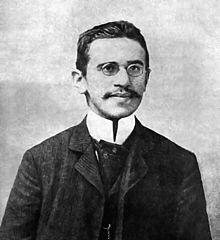
Otto Weininger
Otto Weininger

Otto Weininger was an Austrian philosopher born on April 3, 1880, and died on October 4, 1903. His thoughts mainly revolve around gender, aesthetics, and ethics, and have had a profound impact on philosophy and psychology in the following years. more

You May Also Like

“Do you consider me beautiful?” I ask him this question every day, and each time, my voice carries the freshness of a first inquiry. This isn’t pretense; the authenticity of his response seems to escape my memory, prompting me to seek affirmation anew. His deep exhale fills the brief silence before he responds. “You realize that you are going to have to learn how to answer that question for yourself? You are like a treasurer, asking me to appraise the same ruby every day. While my intentions may lead me to always tell you the truth—that the ruby is invaluable and stunning—if one day I’m not around, you risk encountering someone who, with less honest intentions, might convince you to undervalue it, to give it away for nothing.”

“Do you know that, maybe, I shall leave off grieving over the crime and sin of my life? for such a life is a crime and a sin. And do not imagine that I have been exaggerating anything—for goodness’ sake don't think that, Nastenka: for at times such misery comes over me, such misery.... Because it begins to seem to me at such times that I am incapable of beginning a life in real life, because it has seemed to me that I have lost all touch, all instinct for the actual, the real; because at last I have cursed myself; because after my fantastic nights I have moments of returning sobriety, which are awful!”

“Yale tried to say some­thing, but didn’t know how to be­gin. It had to do with a walk he once took with Nico and Richard around the Lin­coln Park la­goon, the two of them shar­ing Richard’s Le­ica. It struck Yale that day how they both had a way of in­ter­act­ing with the world that was si­mul­ta­ne­ously self­ish and gen­er­ous—grab­bing at beauty and re­flect­ing beauty back. The benches and fire hy­drants and man­hole cov­ers Nico and Richard stopped to pho­to­graph were made more beau­ti­ful by their notic­ing. They were left more beau­ti­ful, once they walked away. By the end of the day, Yale found him­self see­ing things in frames, saw the way the light hit fence posts, wanted to lap up the rip­ples of sun on a record store win­dow. He said, “I get it, I do.”