Quotessence
Home / Quotes / Quote by John Milton

Quote by John Milton

“And of the sixth day yet remained There wanted yet the master work, the end Of all yet done: a creature who not prone And brute as other creatures but endued With sanctity of reason might erect His stature and, upright with front serene, Govern the rest, self-knowing, and from thence Magnanimous to correspond with Heaven, But grateful to acknowledge whence his good Descends, thither with heart and voice and eyes Directed in devotion to adore And worship God supreme who made him chief Of all His works.”

Quote by John Milton

Work

Paradise lost

Written by John Milton, Paradise Lost is a profound narrative that delves into the origins of evil and the struggle between good and evil. The poem narrates the story of the fall of Adam and Eve, their expulsion from Eden, and the subsequent war in heaven. It is renowned for its complex characters, rich symbolism, and profound theological and philosophical themes. more

Author

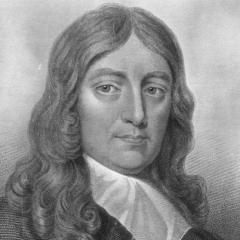
John Milton
John Milton

John Milton, born on December 9, 1608, in London, and died on November 8, 1674, was a renowned English poet and scholar. He is best known for his epic poem 'Paradise Lost,' which has had a profound impact on world literature. more

You May Also Like

“So long as we trace the development from its final outcome backwards, the chain of events appears continuous, and we feel we have gained an insight which is completely satisfactory or even exhaustive. But if we proceed in the reverse way, if we start from the premises inferred from the analysis and try to follow these up to the final results, then we no longer get the impression of an inevitable sequence of events which could not have otherwise been determined.”

“Tragedy springs from its own peculiar sorcery, with treachery, born of envy or ambition, a usual instigator. Treachery is apparent only after the events staged are well over, as we know, its victims dead, or living and smarting under its tricks, realizing too late how they have been misused: if indeed they are ever cognizant of its role, if still players, to this wonder and rue. Most unacceptable is its subtlety, the double-face which double-deals, the Iago perpetrators hidden for decades, smiling the smiles of polite and not so polite society. They nod and wave, heroes to many; sly politicians these Claudiuses. Time favours the Macbeths and forgets the maligned. The former enjoy live, some even oblivious to their lies as being lies, for they prefer to bask in blessings, aping the certainties of creed, cheating death and duty while in pavilions of ease. They succeed on their success, trite or vast; wealth for some, and enviably, fame for the few. The unaware, their victims, float off to obscurity on ruptured vessels of injustice to theater lands unknown, never really knowing why, if the job's done property. Normality is, truthfully, life's whore, readily embraced and conveniently embracing; secretly, it has the clap. Thinking of plot should then give pause. The treacherous cheat fate and re-write, their 'intended history'. Call it fate. They become authors of an illicit story, penmen of their own gods, living their own fresh creation through a new, egregious, utilitarian drama that is untouched by either truth or beauty.”