Quotessence
Home / Quotes / Quote by John Corey Whaley

Quote by John Corey Whaley

“Dr. Webb says that losing a sibling is oftentimes much harder for a person than losing any other member of the family. "A sibling represents a person's past, present, and future," he says. "Spouses have each other, and even when one eventually dies, they have memories of a time when they existed before that other person and can more readily imagine a life without them. Likewise, parents may have other children to be concerned with--a future to protect for them. To lose a sibling is to lose the one person with whom one shares a lifelong bond that is meant to continue on into the future.”

Quote by John Corey Whaley

Work

Where Things Come Back

This book explores themes of environmentalism, identity, and the supernatural through the lens of a young protagonist who discovers that the return of a unique creature to his hometown is more than a simple event. more

Author
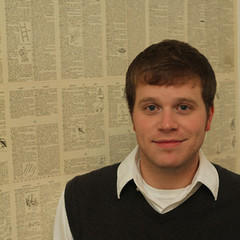
John Corey Whaley
John Corey Whaley

John Corey Whaley is an American writer born on January 19, 1984. His works are acclaimed for their unique narrative style and profound insights into the lives of teenagers. more

You May Also Like

“The biggest mistake that parents make, is believing that their assigned task in life is to teach their children and to guide them in every situation of their children's lives. The truth is that it is the task of parents to both learn from their children and to guide them as well. Parenting is a relationship that goes both ways, from the moment your child is born, you learn from that person, and in fact, your lessons begin long before your child's lessons do. Later on, when you've learned a great deal already, then they begin to learn from you. Throughout our lives, it is a give-and-take relationship, in many ways. Our assigned task is to learn from our children, and to guide and teach them. Their assigned task is to learn from us, and also to teach us.”

“I remember the big gaping hole left by my dad’s absence in the months following the accident. He’d been the one who went to my parent-teacher conferences, the one who taught me mnemonics to memorize the Great Lakes and the Earth’s atmospheres. Whenever I did something silly, my dad always made me feel better by telling me a story from the firehouse about someone who had done something even sillier. Sometimes you don’t realize all the things a person does for you until they aren’t there to do them anymore.”

“Eventually, many years later, I came to see him the way everyone else saw him—a nice guy who, despite all the damage he did to us, wasn’t a bad man, not inherently bad, anyway. He just wasn’t very bright, and was in over his head on almost every level of life. He was capable of only so much and not a drop more, and because he seemed so harmless and lost, people not only liked him, they protected him. My mother, despite her poverty, left the opposite impression. She left no doubt that she was psychologically tough and mentally sharp, and because of that the Wozniaks disliked her. And that was another difference between my mother and father. My father was a whiner, a complainer, a perpetually unhappy man unable to comprehend the simple fact that sometimes life is unfair. My mother never complained, and yet her poverty-stricken life was miserable. She never carried on about the early death of her raging alcoholic mother, or the father who raped her, or of a diet dictated by the restrictions of food stamps.”