Quotessence
Home / Quotes / Quote by Lloyd C. Douglas

Quote by Lloyd C. Douglas

Author

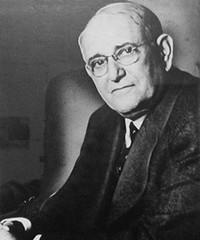
Lloyd C. Douglas
Lloyd C. Douglas

Lloyd C. Douglas was an American author renowned for his historical novels and religious works. His novel 'The Robe' became a bestseller and won the Pulitzer Prize for Fiction in 1945. Born on August 27, 1877, in Mankato, Minnesota, Douglas attended the University of Minnesota and practiced law before turning to writing full-time. His career spanned over 40 books, including both fiction and non-fiction. more

You May Also Like

“The necessity of reform mustn’t be allowed to become a form of blackmail serving to limit, reduce, or halt the exercise of criticism. Under no circumstances should one pay attention to those who tell one: “Don’t criticize, since you’re not capable of carrying out a reform.” That’s ministerial cabinet talk. Critique doesn’t have to be the premise of a deduction that concludes, “this, then, is what needs to be done.” It should be an instrument for those for who fight, those who resist and refuse what is. Its use should be in processes of conflict and confrontation, essays in refusal. It doesn’t have to lay down the law for the law. It isn’t a stage in a programming. It is a challenge directed to what is.”

“If she knew me as I really am she would despise me, and certainly not aid or abet my evil designs. To veil their vices from the sight of the good is the only resource of those who are not blind and know themselves to be vicious.' Thus was I confirmed in habits of hypocrisy; and these, for a time, worked only too effectually to my advantage.”

“The prudent man is always sincere, and feels horror at the very thought of exposing himself to the disgrace which attends upon the detection of falsehood. But though always sincere, he is not always frank and open; and though he never tells any thing but the truth, he does not always think himself bound, when not properly called upon, to tell the whole truth. As he is cautious in his actions, so he is reserved in his speech; and never rashly or unnecessarily obtrudes his opinion concerning either things or persons.”