Quotessence
Home / Quotes / Quote by Milan Kundera

Quote by Milan Kundera

“Cemeteries in Bohemia are like gardens. The graves are covered with grass and colorful flowers. Modest tombstones are lost in the greenery. When the sun goes down, the cemetery sparkles with tiny candles. It looks as though the dead are dancing at a children's ball. Yes, a children's ball, because the dead are as innocent as children. No matter how brutal life becomes, peace always reigns in the cemetery. Even in wartime, in Hitler's time, in Stalin's time, through all occupations. When she felt low, she would get into the car, leave Prague far behind, and walk through one or another of the country cemeteries she loved so well. Against a backdrop of blue hills, they were as beautiful as a lullaby.”

Quote by Milan Kundera

Author
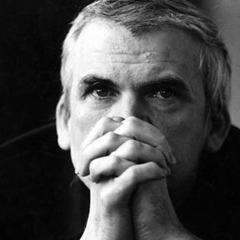
Milan Kundera
Milan Kundera

Milan Kundera is a renowned Czech-French writer known for his profound psychological insights and unique narrative techniques. His works often explore themes of personal freedom, love, morality, and existentialism, with notable titles including 'The Unbearable Lightness of Being' and 'The Joke'. more

You May Also Like

“Superstition, as indigenous to Louisiana as gators and Tabasco, holds that the spirits of the dead avenge any disruption of their bodies, which makes one wonder at the rancor released on the 1957 day when fifty-five white families re-interred their beloved in Hope Mausoleum after the Rt. Rev. Girault M. Jones, Bishop of Louisiana, deconsecrated the Girod Street Cemetery, condemning every last African American bone to anonymity in a mass grave in Providence Memorial Park. From that pogrom grew the Superdome. Thirteen acres of structural steel framing stretch up to 273 feet from the unholy ground, a towering testament to the American propensity to cheer black men into the end zones and desert them entirely six points later.”

“There’s a great mystery in that cemetery, even deeper than the painful or tragic events that populated it. Inside its stone walls are the citizens of my town: they built the stores and mapped out the roads, put up electric lights, founded the hospital, and organized the public library. A few probably lived in my home at one time. They have made my life possible in more ways than I can count, yet we are entire strangers. . . . I do not take these silent neighbors for granted either. Sometimes, when all of the library staff have gone home, the lights are off, and I’m working alone at my desk, I think about them . . . . But most of the time, my feeling is more sadness than fear. It is hard to think about people who have lived full and eventful lives, only to end up as a faded name on a monument; it is even harder to realize that this will eventually happen to me and to all the people I love. My library shelves are full of forgotten books written by unknown people. It is an amazing fact, one that I sometimes contemplate with awe, that all of these books are connections with people now on the other side of mystery, surviving only as a name on a tattered binding. That’s one reason why I sometimes pause and say their names out loud, just to give the universe a chance to hear an old and beloved combination of words one more time. (pp. 100-101)”

“Every Friday evening since the late sixties, at 5:00 p.m. we'd walk into the nearby Brompton Cemetery, which, since its four corners connect Fulham, Chelsea, South Kensington, and Earl's Court, was a convenient meeting point for all our friends. We'd plan our weekend on the grave of Admiral Angus Whitewater. We didn't know the Admiral, he just happened to have an impressive horizontal slab of black marble over his last resting place, which made a great table for drinks.”

“As we drove down the highway and out of the Till country, we passed a large, well-kept graveyard. At one end of it there was a section in very bad condition, separated from the rest by a high iron fence. "That's the Negro section," Amzie remarked, "but I don't get excited about that. The graveyard is the only place where things can be separate ... and equal.”