Quotessence
Home / Quotes / Quote by Robert Hayden

Quote by Robert Hayden

“something they call the american dream sure we still believe in it i guess an earth man in the tavern said irregardless of the some times night mare facts we always try to double talk our way around and its okay the dreams okay and means whats good could be a damn sight better means every body in the good old u s a should have the chance to get ahead or at least should have three squares a day as for myself i do okay”

Quote by Robert Hayden

Work

Collected Poems

This book is a collection of poems that spans different styles and themes, showcasing the diversity of poetic expression. more

Author

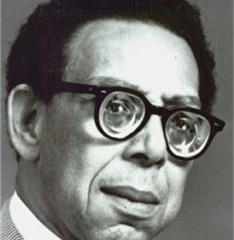
Robert Hayden
Robert Hayden

Robert Hayden was an American poet known for his profound exploration of race and identity. His poetry often reflected the history and culture of the African American community, having a significant impact on contemporary poetry. more

You May Also Like

“The peril we face today is not only that America might fail to live up to its promise, but that Americans might stop believing in that promise or the need to fight for it. The increasing belief on the left that this promise was always a lie, or on the right that it has always been true and has already been achieved, are two sides of the same coin.”

“African Americans have even less mobility. For those born to parents in the bottom income quintile, over half (53 percent) remain there as adults, and only a quarter (26 percent) make it to the middle quintile or higher. Considering the disadvantages that low-income African Americans have had as a result of segregation - poor access to jobs and to schools where they can excel - it’s surprising that their mobility, compared to that of other Americans, isn’t even lower. Two explanations come to mind. One is that many African Americans heed the warning that they have to be twice as good to succeed and exhibit more than average hard work, responsibility, and ambition to supplement a little luck. The other is that our affirmative action programs have been moderately successful. Probably some of both are involved.”

“There is no point in building. There is no more real estate, no more life annuities. There are no more concessions in perpetuity in any cultural cemeteries. Isn’t it better that way? When a meteorite breaks up in space, it is the dazzling trace of its end which stands out. With a celestial body in orbit, it is the ellipse that is the most precious. No ancestors, no heritage, no heirs, no capital. For centuries we have had to accumulate. It is equally obvious that we have to squander everything in a single generation. The future belongs to those who have accumulated everything, then unburdened themselves of it in a single lifetime. You have to move quickly. Ten years to soak up a culture, twenty years to expel it, spew it out ( this part always takes longer). Nothing is interesting unless it passes through the entire cycle of the symbolic murder of culture.”

“The American Dream is not the nation’s promise of opportunity based on one’s ability and hard work alone. Instead, it is the uniquely American ability to believe, despite all evidence to the contrary, that the nation will one day be willing to offer such opportunity. Today, however, was not that day...”

“I was enchanted as soon as I stepped off the train. As were the hundreds of others who got off the train with me who were now in the process of climbing into buggies and wagons, en route to the dozens of resorts, enclaves, and tent campgrounds in the area, where they would soak up the sun, get drunk on Cabernet, swim and picnic in the druidy redwood groves while reciting Shakespeare. I climbed into a wagon and was driven off by a Mr. Lars Magnusson to view the old Olson farm. We traveled a mile or so into the hills, past oak glens, brooks, and pools of water, past manzanitas, madrones, and trees dripping with Spanish moss. Sonoma Mountain was to the west; its shadow cast everything in a soft purple light. When we finally reached the farm and I saw the luscious valley spread out in front of me, I knew this was it. Greengage. It would be a home for me and Martha at first, but I hoped it would soon be something more. A tribute to my mother and her ideals; a community in which she would have flourished, where she would have lived a good long life. Greengage.The burbling creek that ran smack down the middle of the property. The prune, apple, and almond orchards: the fields of wheat, potatoes, and melons. The pastures for cows and sheep. The chicken house and pigsty. The gentle, sloping hills, mounds that looked like God's knuckles, where I would one day plant a vineyard.”