Quotessence
Home / Quotes / Quote by James Dashner

Quote by James Dashner

Work

The Fever Code

Browse quotes and source details for this work. more
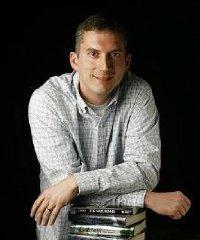
Author

James Dashner
James Dashner

James Dashner, born on November 26, 1972, is an American author renowned for his young adult science fiction novels. His most famous work is the 'Maze Runner' series, which has gained immense popularity among readers worldwide. more

You May Also Like

“Asking where memory is "located" in the brain is like asking where running is located in the body. There are certainly parts of the body that are more important (the legs) or less important (the little fingers) in performing the task of running but, in the end, it is an activity that requires complex coordination among a great many body parts and muscle groups. To extend the analogy, looking for differences between memory systems is like looking for differences between running and walking. There certainly are many differences, but the main difference is that running requires more coordination among the different body parts and can be disrupted by small things (such as a corn on the toe) that may not interfere with walking at all. Are we to conclude, then, that running is located in the corn on your toe?”

“She hadn’t realized the outbuilding— like a sunroom— was connected to the house, and it was a piece of heaven for Saoirse. This was the apothecary to end all apothecaries— a glass-walled sanctuary most definitely infused with magic. The dappled morning light poured through the deceptively tall glass walls and ceiling. Every branch and leaf seemed to stretch toward the light, searching for its warmth and light. The space itself was an airy rectangle, bursting with greenery. On the two shorter, angled walls were multitiered potting tables, each layer crowded with voluminous herbs, delicate blossoms, and trailing vines that cascaded over the edges. The longer glass wall had a counter-height table that ran its full length. Clay pots, glass beakers, and neatly labeled tins cluttered the top. Even the outside seemed to want in, with the leaves still clinging to the trees outside brushing against the glass. On the opposite side was a brick wall lined with open shelves from floor to ceiling. Rowan tracked jars of every shape and size on the shelves. They were filled with dried herbs, amber and emerald oils, crushed petals, powdered roots, and mystery mixtures just waiting for Saoirse to use them. Possibility. It was the only word that came to mind. This apothecary held a world of possibilities for Saoirse. With everything at her fingertips, her sister could spend a lifetime crafting healing potions, infusing them into soaps, lotions, and balms. Saoirse stood in the center of the room, arms wide. She whirled around. “Isn’t it perfect?” she squealed, pushing her glasses up. She wrapped her arms around herself. “I was just wandering around and it’s like a magnet pulled me to this room. My room.”

“Do you love your country and your king?" Karigan paused. What a curious question. King Zachary was relatively new to the throne and she knew little of his policies or methods, but it wouldn't do to sound disloyal to a dying servant of Sacoridia. "Yes." "I'm a messenger...Green Rider." The young man's body spasmed with pain, and blood dribbled over his lip and down his chin. "The satchel on the saddle...important message for...king. Life or death. If you love Sacor...Sacoridia and its king, take it. Take it to him.”

“We all have an unscientific weakness for being always in the right, and this weakness seems to be particularly common among professional and amateur politicians. But the only way to apply something like scientific method in politics is to proceed on the assumption that there can be no political move which has no drawbacks, no undesirable consequences. To look out for these mistakes, to find them, to bring them into the open, to analyse them, and to learn from them, this is what a scientific politician as well as a political scientist must do. Scientific method in politics means that the great art of convincing ourselves that we have not made any mistakes, of ignoring them, of hiding them, and of blaming others from them, is replaced by the greater art of accepting the responsibility for them, of trying to learn from them, and of applying this knowledge so that we may avoid them in future.”