Quotessence
Home / Quotes / Quote by Bruce Catton

Quote by Bruce Catton

“His soldiers and the country might have been better off if Burnside had been more of a quitter, but that was one defect which he lacked.”

Quote by Bruce Catton

Work

Glory Road

This book chronicles the journey of the University of Texas Longhorns to victory in the 1966 NCAA basketball championship. It delves into the team's background, the challenges they faced, and the significance of their win in the context of the era. more
Author

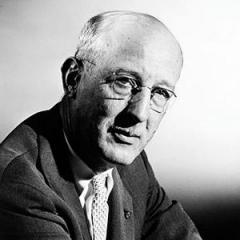
Bruce Catton
Bruce Catton

Bruce Catton was an American historian renowned for his works on the American Civil War. His writing style, marked by clarity and narrative power, made complex historical events understandable to a broad audience. Catton was awarded the Pulitzer Prize for History in 1953 for his book 'The Civil War: A Narrative'. more

You May Also Like

“All in all, it was as if a clean wind from the blue mountains had blown through this army, sweeping away weariness and doubt and restoring the spirit with which the men had first started out; restoring, for the last time in this war—perhaps for the last time anywhere—that strange, magical light which rested once upon the landscape of a young and totally unsophisticated country, whose perfect embodiment the army was. In a way, this army was fighting against reality, just as was Lee’s army. The dream which possessed the land before 1861 was passing away in blood and fire. One age was ending and another was being born, with agony of dissolution and agony of birth terribly mingled; and in the Army of the Potomac—in its background, its coming together, its memories of the American life which it imagined it was fighting to preserve—there was the final expression of an era which is still part of our heritage but which is no longer a part of any living memories.”

“Across the river he could see the burnt and crushed buildings of Fredericksburg, the debris piled along the streets, the scattered ruins of people's lives, lives that were changed forever. His men had done that. Not all of it, of course. The whole corps had seemed to go insane, had turned the town into some kind of violent party, a furious storm that blew out of control, and he could not stop it. The commanders had ordered the provost guards at the bridges to let no goods leave the town, nothing could be carried across the bridges, and so what the men could not keep, what they could not steal, they had just destroyed. And now, he thought, the people will return, trying to rescue some fragile piece of home, and they will find this...and they will learn something new about war, more than the quiet nightmare of leaving your home behind. They will learn that something happens to men, men who have felt no satisfaction, who have absorbed and digested defeat after bloody stupid defeat, men who up to now have done mostly what they were told to do. And when those men begin to understand that it is not anything in them, no great weakness or inferiority, but that it is the leaders, the generals and politicians who tell them what to do, that the fault is there, after a while they will stop listening. Then the beast, the collective anger, battered and bloodied, will strike out, will respond to the unending sights of horror, the deaths of friends and brothers, and it will not be fair or reasonable or just, since there is no intelligence in the beast. They will strike out at whatever presents itself, and here it was the harmless and innocent lives of the people of Fredericksburg.”

“There is no way to know Jackson’s thought process as he prepared to engage the Union army in front of him. He knew very little about it and certainly he had no idea that, at the moment he ordered his men to advance, he was actually outnumbered five to one. But it was characteristic of the man that his means of determining the enemy’s strength was to hit the enemy in the face and then see what happened. Typical, too, was his impatience to fight. As at Port Republic, he chose to attack before his full force had arrived.”

“The end of the war was like the beginning, with the army marching down the open road under the spring sky, seeing a far light on the horizon. Many lights had died in the windy dark but far down the road there was always a gleam, and it was as if a legend had been created to express some obscure truth that could not otherwise be stated. Everything had changed, the war and the men and the land they fought for, but the road ahead had not changed. It went on through the trees and past the little towns and over the hills, and there was no getting to the end of it. The goal was a going-towards rather than an arriving, and from the top of the next rise there was always a new vista. The march toward it led through wonder and terror and deep shadows, and the sunlight touched the flags at the head of the column.”

“Haupt’s head swam at the thought of dumping this howling mob down on a battlefield. Orders were orders, to be sure, but he was enough of an army man to know that there are ways and ways of rendering obedience. He delayed the train as long as he could; then, when he finally sent it off, he wired the officer in command at Fairfax Station to arrest all who were drunk.”

“Buford didn’t dress for respect, he earned it. He didn’t try to get his name in the newspapers, instead he led with deeds that caused his men to follow his guidon with confidence and the full expectation of success.”