Quotessence
Home / Quotes / Quote by Marcel Proust

Quote by Marcel Proust

“Non subisco mai l'autorità delle perturbazioni atmosferiche né delle divisioni convenzionali del tempo. Sarei lieto di riabilitare l'uso della pipa d'oppio e del kriss malese, ma ignoro quello di quegli strumenti infinitamente più perniciosi e d'altronde piattamente borghesi, l'orologio e l'ombrello.”

Quote by Marcel Proust

Work

Swann’s Way

Swann’s Way is a seminal work in modernist literature, renowned for its intricate narrative structure and richly detailed portrayal of human emotions and social interactions. The novel follows the protagonist, Charles Swann, as he navigates the complexities of his personal and social life, reflecting on his relationships, memories, and the passage of time. more

Author

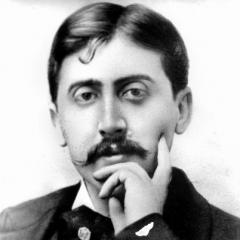
Marcel Proust
Marcel Proust

Marcel Proust was a French novelist renowned for his magnum opus, 'In Search of Lost Time'. This novel is considered a classic of 20th-century literature, known for its intricate psychological portrayals and profound exploration of memory. more

You May Also Like

“All love is bittersweet. Love is inexplicable; it is part poetry and part masochism. Part of love is the loss of self-control because one must openly surrender their sense of an exclusive self to the manic powers of love. The personal act of surrender to a lover leaves one vulnerable to entanglement in a maze of emotions. When we fall in love, our lover’s happiness and well-being assumes the primary role in our mind, they become copilots of our souls. When we are in love for the first time, we feel what it means to become a complete person; we identify who we are by seeing our reflection in our lover’s eye; and we sense what we might become when infused with love. When our lover leaves us, we feel vexed and vacant because we recognize that they took up such a large part of what made us feel intoxicated with life. When our lover abandons us, we lose our sense of self; we temporarily cease to exist as a whole person, and we must reconstruct the shattered remnants of oneself in the wake of a love lost.”

“In another life, we might have spent this evening nestled in a corner table at some café, drinking good Bordeaux, listening to Chet Baker, discussing hypothetical trips to the Greek islands or the construction of a backyard greenhouse where we would consider the merits of growing a lemon (or avocado?) tree in a pot and sit under a bougainvillea vine like the one my mom planted the year I turned eleven, before my dad left. Jazz. Santorini. Lemon trees. Beautiful, loving details, none of which matter anymore. Not in this life, anyhow. That chapter has ended. No, the book has.”