Quotessence
Home / Quotes / Quote by Mary Stewart

Quote by Mary Stewart

“It was as if the past, till then so longed-after, so lived-over, had slipped off my shoulders like a burden. The future was still hidden, somewhere in the lights that made a yellow blur in the sky beyond the end of the dark street. Here between the two I waited, and for the first time saw both clearly. ...I had made myself a stranger in England, not only bereaved, but miserably dépaysée, drifting with no clear aim, resenting the life I had been thrust into with such tragic brutality; I had refused to adapt myself to it and make myself a place there, behaving like the spoilt child who, because he cannot have the best cake, refuses to eat at all. I had waited for life to offer itself back to me on the old terms. Well, it wasn’t going to. Because of my childhood I had rejected what England had for me, and now the Paris of my childhood had rejected me. Here, too, I had been dispossessed. And if I was ever to have a place, in whatever country – well, nobody ever wanted you anyway unless you damned well made them. And that was what I would have to do. I had my chance in front of me now...”

Quote by Mary Stewart

Author
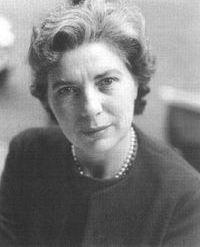
Mary Stewart
Mary Stewart

Mary Stewart, a British novelist, was born on September 17, 1916, and passed away on May 9, 2014. Known for her suspense, historical, and romance novels, her works have enjoyed great popularity among readers. more

You May Also Like

“Another silence. He was standing very still now. Was it a trick of the mist or was he really a very long way away from me, a lonely figure in the queerly-lit darkness? It came to me suddenly that this was how I would always remember him, someone standing alone, apart from the others even of his own family. And, I think for the first time, I began to see him as he really was—not any more as a projection of my young romantic longings, not any more as Prince Charming, the handsome sophisticate, the tiger I thought I preferred. . . . This was Raoul, who had been a quiet, lonely little boy in a house that was "not a house for children," an unhappy adolescent brought up in the shadowof a megalomaniac father, a young man fighting bitterly to save his small inheritance from ruin . . . wild, perhaps, hard, perhaps, plunging off the beaten track more than once . . . but always alone. Wrapped up in my loneliness and danger I hadn't even seen that his need was the same as my own. He and I had hoed the same row, and he for a more bitter harvest.”

“I have dwelt at length with this poem because it epitomizes and transforms much eighteenth-century criticism of Spenser and because, like any other imitation, it acts as an implicit criticism of the original. The Minstrel takes up major themes in mid-century poetics and criticism - speculative interest in origins, natural descriptions, humble life, the supernatural, education, political corruption - and merges them, awkwardly it must be said - into something recalling a Spenserian romance. The celebrity of Beattie's poem has more to do with its intellectual than its poetic achievements. The Minstrel demonstated that romance could take on the serious social business hitherto treated in epic and georgic, epistle and satire; it proved to an age obsessed with originality that a poet might imitate wihout copying, and emulate Spenser in a way that avoided objections to archaism, allegory, and the use of stanzas in a long poem. Beattie did all these things but did them imperfectly. For the next fifty years, romantic Spenserians would retain beattie's doctrines while refining his poetics.”

“But first of all he is a woodsman, and you aren't a woodsman unless you have such a feeling for topography that you can look at the earth and see what it would look like without any woods or covering on it. It's something like the gift all men wish for when they or young-- or old-- of being able to look through a woman's clothes and see her body, possibly even a little of her character.”