Quotessence
Home / Quotes / Quote by Niall Horan

Quote by Niall Horan

“Being single doesn't mean you're weak, it means that you're strong enough to wait for the right person.”

Quote by Niall Horan

Author
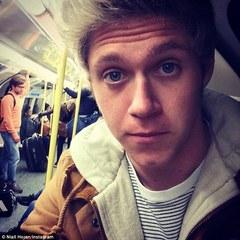
Niall Horan
Niall Horan

Niall Horan, born on September 13, 1993, is an Irish singer and songwriter. He gained fame as a member of the boy band One Direction, which rose to prominence after appearing on the British reality show The X Factor in 2010. Horan's unique voice and songwriting talent have established him as a notable figure in the music industry, and his solo career has also achieved significant success. more

You May Also Like

“We now know that killer whales are one of the very few mammalian species that can learn new sounds and reproduce them. Dogs and cats, for example—there’s not a chance you could teach a dog to meow or a cat to bark. It’s a very rare ability to learn sounds and reproduce them. We can do it, as humans. Some primates can. Some of the whales can. The calls Moby Doll made in 1964—we still hear today from his kin group that still exists out there. If all roads lead to Rome, all oceans lead to Moby Doll.”

“People had considered this the most fearsome creature on the planet. The most vicious. The most predatory. Without any rivals. It could beat anything in the ocean, so, therefore, it qualified as the most feared of all beasts. Totally wrong. So I guess Moby Doll changed the world’s attitudes towards killer whales. Instead of seeing a killer—a savage monster like Moby Dick—the world met a cuddly companion, Moby Doll.”

“Orcas and some other large whales have spindle neurons in their brains. These are cells that process emotion humans thought existed only in apes and us. Spindle neurons have been called the cells that make us human. They're the part of the brain that deals with complex emotions like love, guilt, grief and even embarrassment. Since these are the cells that allow us to feel deeply, isn't it likely they do the same for orcas?”

“But what if the capture of the young calf had never occurred? Tilikum might still be swimming free in the frigid waters of the North Atlantic, chasing his cherished herring, perhaps alongside his mother. He might be surrounded by siblings, nieces, and nephews, and his grandmother might still be leading the pod. An oceanic Tilikum would be gliding through his boundless home with fearless power and majestic grace, his fin erect, his teeth intact, his interactions with humans minimal and nonlethal. There would be no need for gelatin or Tagamet, antibiotics or isolation. And of course, if Tilikum had never been wrenched away from his family and friends, entirely for the amusement of humans, the family and friends of Keltie Byrne, Daniel Dukes, and Dawn Brancheau might not be grieving to this day. Tilikum was trying to tell us something. It was time to listen.”

“Tragically, the average life expectancy during this era for captive orcas stood between one to four years. Aquariums often went through a whole series of whales before just one of them made it into adolescence. Today, the life expectancy of captive killer whales has improved: rising to about ten years. Yet this is still a far cry from the thirty to sixty years that orcas can live in the ocean.”

“Then Jack Hanna joined the fray: “How are you going to love something, Larry, unless you see something? You can’t love something and save something unless you see it.” Naomi had heard this argument before. It was ridiculous on its face, she thought. What about dinosaurs? People, and especially kids, were crazy about dinosaurs. They loved them, without ever having laid eyes on a single one.”

“Unless we understand our natural intelligence, we will not be able to manage Artificial Intelligence. We will only use it to feed our already bloated ego." As we venture into the era of Artificial Intelligence, it is essential to reflect on the profound wisdom in this statement. Understanding our own natural intelligence - our cognitive abilities, emotions, and ethical considerations - is the key to responsibly harnessing the potential of AI. Let's embark on a journey of self-awareness and humility. By recognizing our strengths and limitations as humans, we can identify the areas where AI can complement and enhance our capabilities, rather than overshadowing or replacing them. With a clear understanding of our own biases and motivations, we can ensure that AI is developed and utilized in ways that benefit all of humanity. Let's not allow AI to reinforce harmful behaviors or serve as a tool to feed our egos, rather let's channel its power for the greater good. By embracing our humanity and acting responsibly, we can manage AI in a manner that promotes ethics, privacy, and societal well-being. Let's use AI as a force for positive advancements, lifting each other and creating a more inclusive and equitable world. #EmbraceHumanity #TechnologyForGood”