“It slowly began to dawn on me that I had been staring at her for an impossible amount of time. Lost in my thoughts, lost in the sight of her. But her face didn't look offended or amused. It almost looked as if she were studying the lines of my face, almost as if she were waiting. I wanted to take her hand. I wanted to brush her cheek with my fingertips. I wanted to tell her that she was the first beautiful thing that I had seen in three years. The sight of her yawning to the back of her hand was enough to drive the breath from me. How I sometimes lost the sense of her words in the sweet fluting of her voice. I wanted to say that if she were with me then somehow nothing could ever be wrong for me again. In that breathless second I almost asked her. I felt the question boiling up from my chest. I remember drawing a breath then hesitating--what could I say? Come away with me? Stay with me? Come to the University? No. Sudden certainty tightened in my chest like a cold fist. What could I ask her? What could I offer? Nothing. Anything I said would sound foolish, a child's fantasy. I closed my mouth and looked across the water. Inches away, Denna did the same. I could feel the heat of her. She smelled like road dust, and honey, and the smell the air holds seconds before a heavy summer rain. Neither of us spoke. I closed my eyes. The closeness of her was the sweetest, sharpest thing I had ever known.”
Quote by Patrick Rothfuss
Book:The Name of the Wind
Work
The Name of the Wind
Browse quotes and source details for this work. more
Author
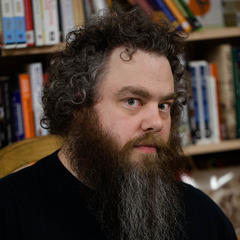
Patrick Rothfuss
Patrick Rothfuss, born on June 6, 1973, is a renowned American writer known for his works in the fantasy genre. His most famous series is 'The Name of the Wind,' which has gained widespread acclaim for its unique narrative style and profound philosophical insights. more
You May Also Like
“Time tells nothing, only tears do. Time heals nothing, only tears do.”
Source: Amor Apocalypse: Canım Sana İhtiyacım
“And here comes the battle between you and your thoughts, And you always lose miserably”
“I apologized for being me until there was no one left to be sorry for”
Source: The Calligraphy of God: A Collection of Love Poems
Source: The Anthropocene Reviewed: Essays on a Human-Centered Planet
“What's a little light stabbing between lovers?”
Source: Our Violent Ends
“No one wants to look too closely at another person's pain.”
Source: King of Scars
Source: Kairos: A Syren Story
Source: Kairos: A Syren Story
Source: Speak