Quotessence
Home / Quotes / Quote by Marcel Proust

Quote by Marcel Proust

“We do not receive wisdom, we must discover it for ourselves, after a journey through the wilderness which no one else can make for us, which no one else can spare us, for our wisdom is the point of view from which we come at last to regard the world. The lives that you admire, the attitudes that seem noble to you, have not been shaped by paterfamilias or a schoolmaster, they have sprung from very different beginnings, having been influenced by everything evil or commonplace that prevailed round about them. They represent a struggle and a victory. I can see that picture of what we were at an earlier stage may not be recognisable and cannot, certainly, be pleasing to contemplate in later life. But we must not repudiate it, for it is a proof that we have really lived, that it is in accordance with the laws of life and of the mind that we have, from the common elements of life, of the life of studios, of artistic groups—assuming one is a painter—extracted something that transcends them.”

Quote by Marcel Proust

Author
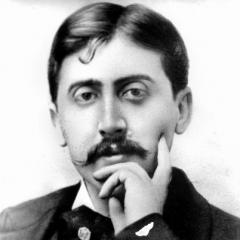
Marcel Proust
Marcel Proust

Marcel Proust was a French novelist renowned for his magnum opus, 'In Search of Lost Time'. This novel is considered a classic of 20th-century literature, known for its intricate psychological portrayals and profound exploration of memory. more

You May Also Like

“...there’s different ways of experiencing time. And one is the kind of time that you and I know really intimately, which is tragic time. And we know what it’s like to feel that heightened present where everything really matters because you have to make choices, because everything you love is so precious. And also, we know that we can’t live there forever, because we are just not — we’re not built to live that edge, that close to the edge all the time. And then there’s — he reminded me of ordinary time, or pastoral time. Anyone who’s a farmer knows there’s sowing and reaping time. And I was always, the more I was into tragic time, the more I was a little judgmental about that. I was like: It sounds very boring; it sounds very commonplace. But that’s the — who’s picking up your mom on Tuesday? Did you send that email? Have you made that phone call? It’s all the wonderful, stupid, ordinary stuff of day-to-day life. And like, that is also necessary and good. And then there is something that we’ve all experienced together, very recently, which is apocalyptic time. It’s the feeling that there’s a heightened — that we know that the future is not guaranteed and that there is a kind of lightness and darkness and — like binaries. We’re kind of wrapped up in binaries about how we’re seeing the world. And we experience apocalypticism with our environment: like wildfires and global warming… and fear of — and we see it and we feel it. We experience the apocalyptic time when we see the scope and magnitude of racial injustice, as we understand that structures are not just broken but that they collapse in on people, and that the weak are not sheltered, and that the poor are not cared for, and that far more people are not given the luxury of invulnerability, and can’t and won’t. And in all these forms of time, we have this feeling like we’re seeing things as they really are — like that feeling when you count your kid’s eyelashes and you think, “I see the whole world in just right now.” But the truth is, all of them are true, and we toggle between them all, all the time. And so we just can’t live in any one version for too long, frankly, without not really seeing the scope of — what the wholeness of our lives require.”