“The words chance and genius do not denote any really existing thing and therefore cannot be defined. Those words only denote a certain stage of understanding of phenomena. I do not know why a certain event occurs; I think that 1 cannot know it; so 1 do not try to know it and I talk about chance. I see a force producing effects beyond the scope of ordinary human agencies; I do not understand why this occurs and I talk of genius. To a herd of rams, the ram the herdsman drives each evening into a special enclosure to feed and that becomes twice as fat as the others must seem to be a genius. And it must appear an astonishing conjunction of genius with a whole series of extraordinary chances that this ram, who instead of getting into the general fold every evening goes into a special enclosure where there are oats—-that this very ram, swelling with fat, is killed for meat. But the rams need only cease to suppose that all that happens to them happens solely for the attainment of their sheepish aims; they need only admit that what happens to them may also have purposes beyond their ken, and they will at once perceive a unity and coherence in what happened to the ram that was fattened. Even if they do not know for what purpose they are fattened, they will at least know that all that happened to the ram did not happen accidentally.”
Quote by Leo Tolstoy
Work
A profound and sweeping narrative that delves into the complexities of human relationships and the impact of historical events on individuals, "War and Peace" is renowned for its rich character development and intricate portrayal of the Napoleonic era. more
Author
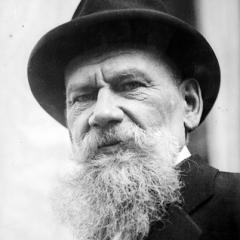
Leo Tolstoy was a Russian writer and thinker, a prominent representative of 19th-century Russian literature. His works deeply revealed social contradictions and human nature, and had a profound impact on the world. more
You May Also Like
“Where a human values a human, there flourishes civilization.”
“In our society , I prefer to be on the side of the "ignored" people.”
“Being open-hearted is a prerequisite for being a full, kind, and wise human being.”
“I prefer to be on the side of the "ignored" people in our society.”